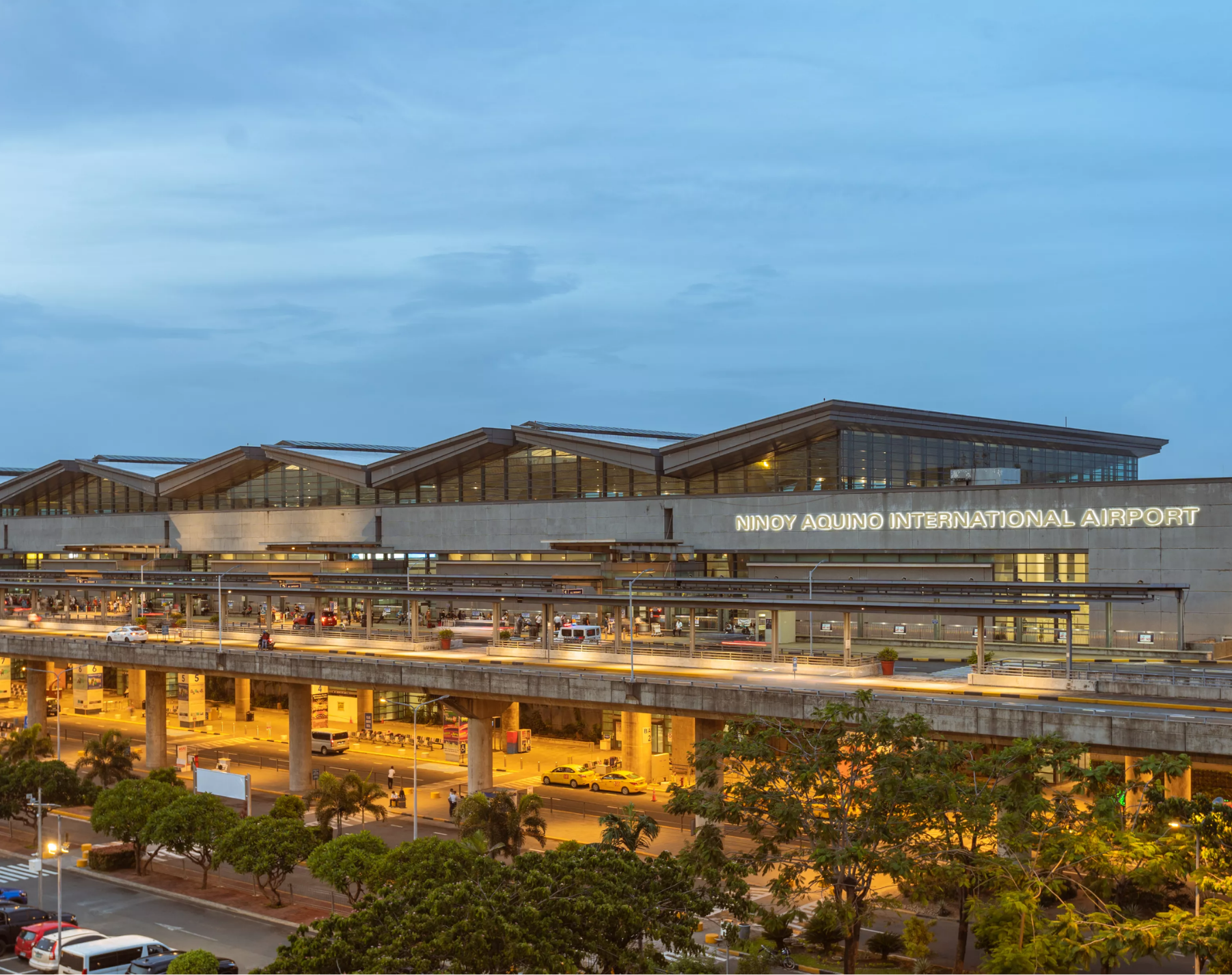
From modern security screening and biometric immigration gates to expanded passenger capacity, here's a closer look at the developments shaping the future of the Philippines' main international gateway.
Is Ninoy Aquino International Airport (NAIA) preparing for a major transformation?
The Philippines' primary international gateway is undergoing a series of modernization and expansion efforts under New NAIA Infra Corp. (NNIC), the San Miguel Corporation-led private operator tasked with rehabilitating, operating, and expanding the airport.
With passenger traffic reaching a record 52.02 million in 2025, surpassing its original annual design capacity of approximately 35 million, the need to improve airport facilities and operations has become increasingly important.
The ongoing ₱170.6-billion NAIA Public-Private Partnership (PPP) project aims to increase the airport's annual passenger capacity to 62 million by 2028, alongside improvements in infrastructure, technology, and passenger services.
But what exactly can travelers expect? Here are some of the major developments shaping NAIA's future.
1. MODERNIZED SECURITY SCREENING SYSTEMS
Airport security is among the latest priorities in NAIA's modernization efforts.
On September 9, 2026, NNIC and the United States Trade and Development Agency (USTDA) signed an agreement to support the assessment and development of upgraded security screening systems across NAIA's terminals.
Under the agreement, USTDA will fund technical assistance to help identify suitable screening technologies, assess operational requirements, and explore solutions aligned with international aviation security standards.
The initiative aims to strengthen passenger safety while improving screening efficiency as the airport accommodates growing passenger volumes.
However, the agreement covers technical assistance and assessment, meaning the proposed systems are still subject to evaluation and further development.
2. BIOMETRIC IMMIGRATION E-GATES
Technology is also playing a bigger role in making airport processing more convenient.
NAIA has introduced 78 biometric immigration e-Gates through a phased rollout, with systems operating at Terminals 1 and 3.
The technology allows eligible passengers to complete immigration clearance in approximately 20 seconds using biometric verification, helping reduce queues and improve passenger flow.
The system is part of efforts to streamline immigration processing while maintaining security and verification procedures.
3. TERMINAL 3 GETS NEW FACILITIES AND AMENITIES
Passengers passing through Terminal 3 have already seen several improvements aimed at making their airport experience more comfortable.
Among the additions launched in December 2025 were the All-Filipino Tambayan Food Hall, Mezzanine Food Hall, a new Food Village, and a Dignitaries Lounge.
Other improvements across the terminal include upgraded seating, cooling systems, restrooms, Wi-Fi connectivity, baggage handling, and passenger facilities.
These developments focus on more than just aesthetics, addressing everyday travel concerns such as comfort, accessibility, and convenience.
4. PROPOSED TERMINAL 5 EXPANSION
As passenger demand continues to increase, NAIA's long-term expansion plans also include the proposed development of Terminal 5.
The former Philippine Village Hotel property has been identified as the site for the planned terminal, which forms part of the airport's broader strategy to accommodate more travelers.
The proposed development is expected to provide additional passenger-handling capacity as air travel demand grows.
However, the project remains part of the airport's longer-term development plans, with further details on its construction and completion still to be established.
5. INCREASED PASSENGER AND AIRPORT CAPACITY
One of the biggest goals of NAIA's modernization program is to address congestion and accommodate the increasing number of domestic and international travelers.
The airport's annual passenger capacity is targeted to increase from approximately 35 million to 62 million by 2028.
The program also aims to increase aircraft movements from around 40–42 to 48 per hour through improvements in airport infrastructure and operational efficiency.
Beyond expanding facilities, these changes are intended to maximize the use of existing airport resources and improve coordination across airport operations.
6. STRONGER AIRPORT MONITORING AND OPERATIONS
Airport modernization also involves strengthening security infrastructure and improving how airport facilities are managed.
On November 6, 2026, the Manila International Airport Authority (MIAA) formally turned over operational control of more than 2,100 closed-circuit television (CCTV) cameras across NAIA to NNIC.
The transfer, announced by MIAA on November 7, forms part of the airport's transition of operations and maintenance responsibilities under its public-private partnership agreement.
MIAA, meanwhile, continues to exercise its regulatory and oversight functions to ensure compliance with the concession agreement and applicable airport standards.
MORE THAN JUST A FACELIFT
Modernizing NAIA goes beyond renovating terminals or introducing new technology. It involves improving the entire passenger journey, from airport entry and security screening to immigration clearance, boarding, and arrival.
With millions of travelers passing through the airport each year, the challenge is to ensure that its infrastructure, facilities, and operations can keep up with the country's growing aviation demands.
While several improvements are already in place, other developments remain under assessment, planning, or phased implementation.
Ultimately, the goal is to make NAIA a safer, more efficient, and more passenger-friendly gateway that can better serve Filipinos and international visitors.
The bigger question now is: Can these modernization efforts turn NAIA into the airport experience that travelers have been waiting for?