March Inflation Hits 20-Month High of 4.1% as Global Oil Crisis Hits Home
MANILA, Philippines — Consumer price growth in the Philippines accelerated to 4.1 percent in March 2026, overshooting the government's target range for the first time in nearly two years. Data released by the Philippine Statistics Authority (PSA) on Tuesday, April 7, confirmed that the spike was primarily driven by a dramatic surge in energy and transport costs.
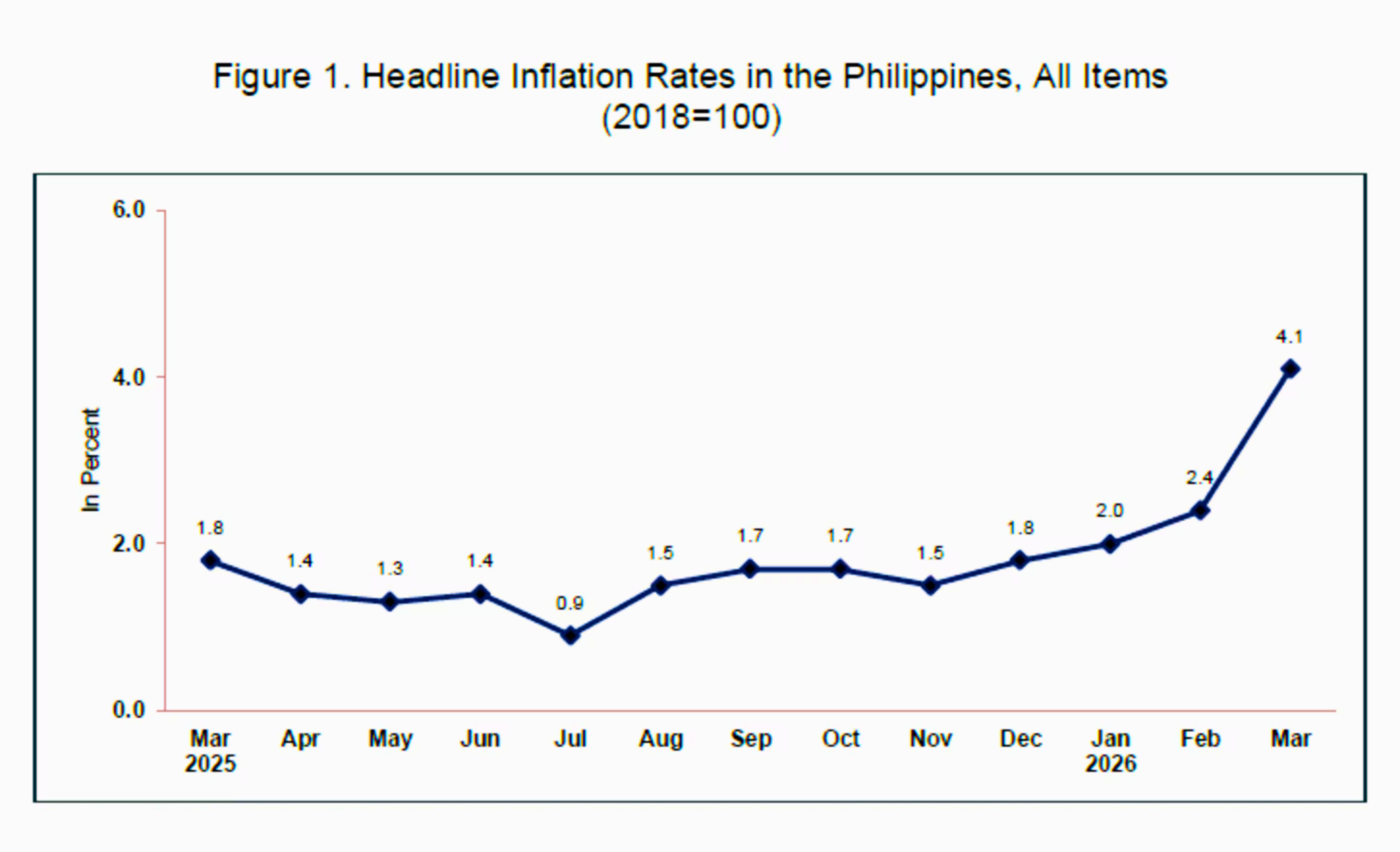
Source: Philippines Statistics Authority, Retail Price Survey of Selected Commodities for the Generation of Consumer Price Index
The March figure marks a significant jump from the 2.4 percent recorded in February, ending a period of relatively stable prices. National Statistician Claire Dennis Mapa noted that the breach of the 2 to 4 percent target band was fueled by the "skyrocketing" cost of petroleum products.
Transport and Fuel Lead the Surge
The transport sector was the heaviest contributor to the uptick, with inflation in that category hitting 9.9 percent. This was fueled by a staggering 27.3 percent year-on-year increase in gasoline prices and a 59.5 percent climb in diesel prices.
The price shocks are largely attributed to the escalating conflict in the Middle East, which has disrupted global supply chains and pushed crude oil prices past the $100 per barrel mark. Economists warn that these "first-round" effects—direct hits to fuel and electricity—are likely to spill over into secondary impacts, such as higher food prices and potential petitions for wage and fare hikes.
Policy Outlook
The Bangko Sentral ng Pilipinas (BSP) is now under pressure to reconsider its monetary stance. While the central bank recently kept interest rates steady at 4.25 percent, analysts suggest that a "prolonged hold" or even a rate hike may be necessary if inflation expectations continue to unanchor.
For now, the government is being urged to provide targeted subsidies to vulnerable sectors, including transport workers and farmers, to cushion the blow of the most severe energy crisis since the 1970s.