57 New Marine Species Discovered in Deep-Sea Canyon Off Argentina
Scientists have identified 57 new marine species and five new genera from deep-sea samples collected in Argentina’s Mar del Plata Submarine Canyon, revealing just how much remains unknown about life in the depths of the South Atlantic.
The discoveries were made during an international Species Discovery Workshop held in Buenos Aires from July 13 to 24, 2026. Led by the Nippon Foundation-Nekton Ocean Census in partnership with the Schmidt Ocean Institute, the workshop brought together 20 taxonomists and early-career researchers from Latin America and Europe to examine specimens collected during a deep-sea expedition in 2025.
The samples came primarily from the Schmidt Ocean Institute’s Underwater Oases of the Mar del Plata Canyon expedition, which explored the canyon using the remotely operated vehicle (ROV) SuBastian. The canyon reaches depths of more than 3,500 meters, making it one of Argentina’s largest and deepest underwater canyons.
The region is particularly significant because it lies near the Brazil-Malvinas Confluence, where warm, salty waters from the Brazil Current meet cold, nutrient-rich waters carried northward by the Malvinas Current. This meeting of water masses creates highly productive conditions that support a diverse range of marine life.
Among the discoveries are new species of sea cucumbers, sea stars, corals, sea pens, copepods and other deep-sea organisms.
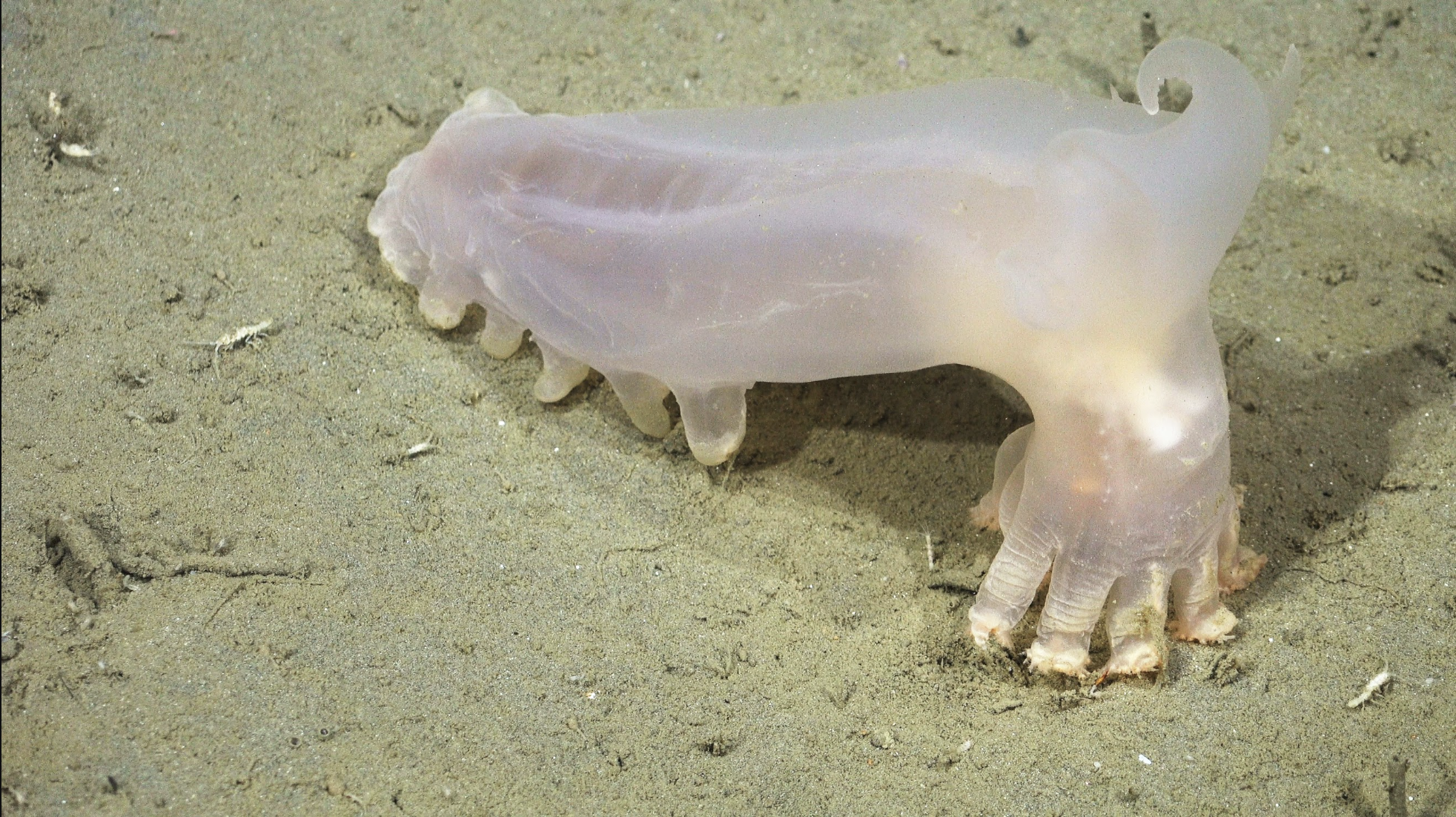
Photo Courtesy: ROV SuBastian / Schmidt Ocean Institute
“Loki the Sea Cucumber”
One of the workshop’s standout discoveries was “Loki the Sea Cucumber” (Peniagone sp.), a striking deep-sea holothurian found at a depth of approximately 2,577 meters in the Mar del Plata Submarine Canyon.
The species earned its nickname from its prominent horn-like appendages, which reminded researchers of Loki, the Norse god known for his distinctive appearance in popular culture.
“Loki” is among up to 10 new holothurian species identified during the workshop, highlighting the remarkable diversity of sea cucumbers living in Argentina’s deep waters.
The species was examined by taxonomists Francisco Alonso Solís-Marín and Mariano Martinez of CONICET.
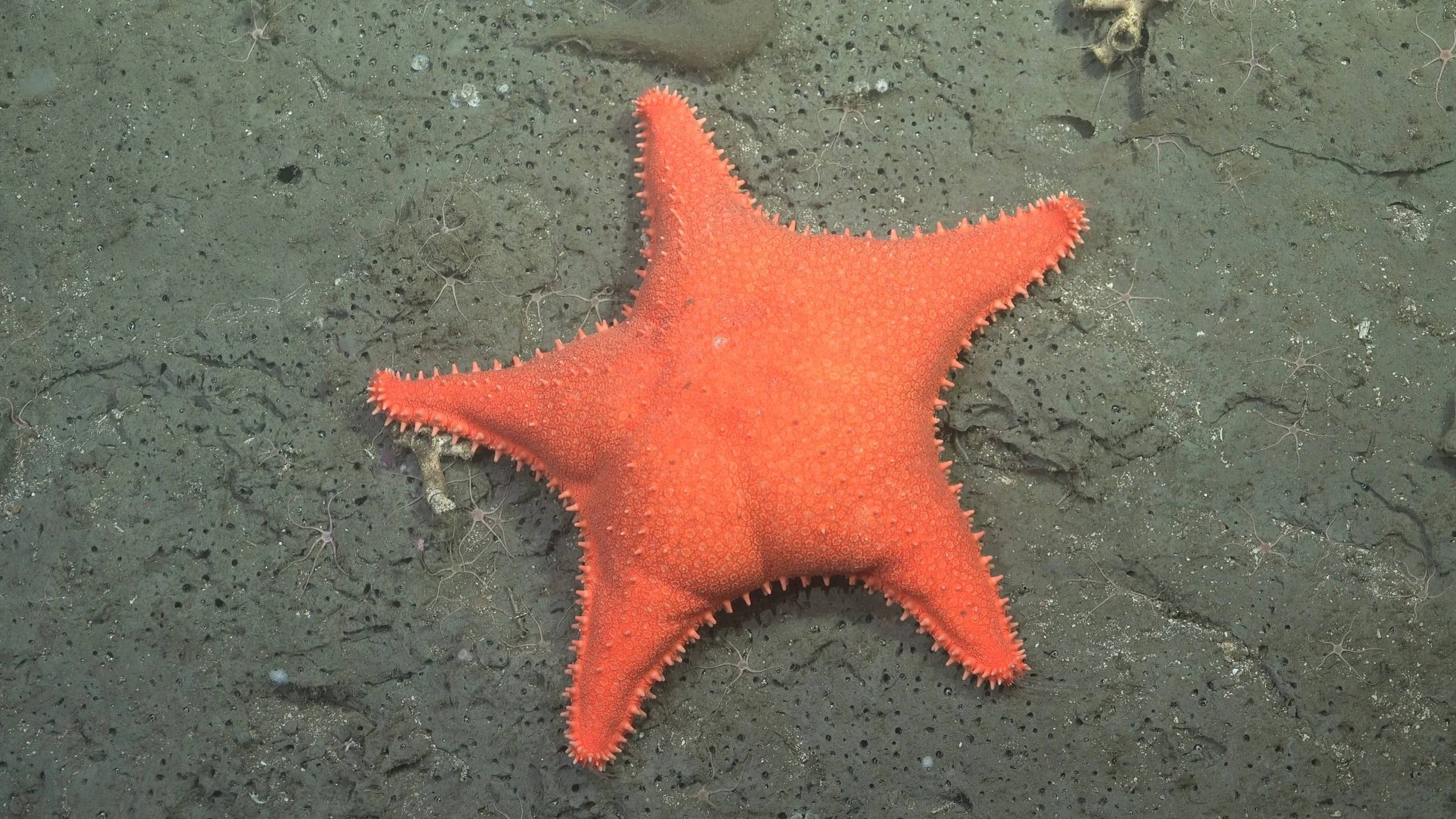
Photo Courtesy: ROV SuBastian / Schmidt Ocean Institute
“Patrick Star” and the Deep-Sea Sea Star
Another creature that gained international attention during the expedition was a bright orange deep-sea sea star that viewers nicknamed “Patrick Star” because of its resemblance to the cartoon character from SpongeBob SquarePants.
More than four million people watched the expedition’s live broadcasts, where the sea star became one of the most recognizable animals encountered during the exploration.
Despite its appearance and popularity online, scientists did not consider “Patrick Star” to be a new species. The animal was left undisturbed during the expedition.
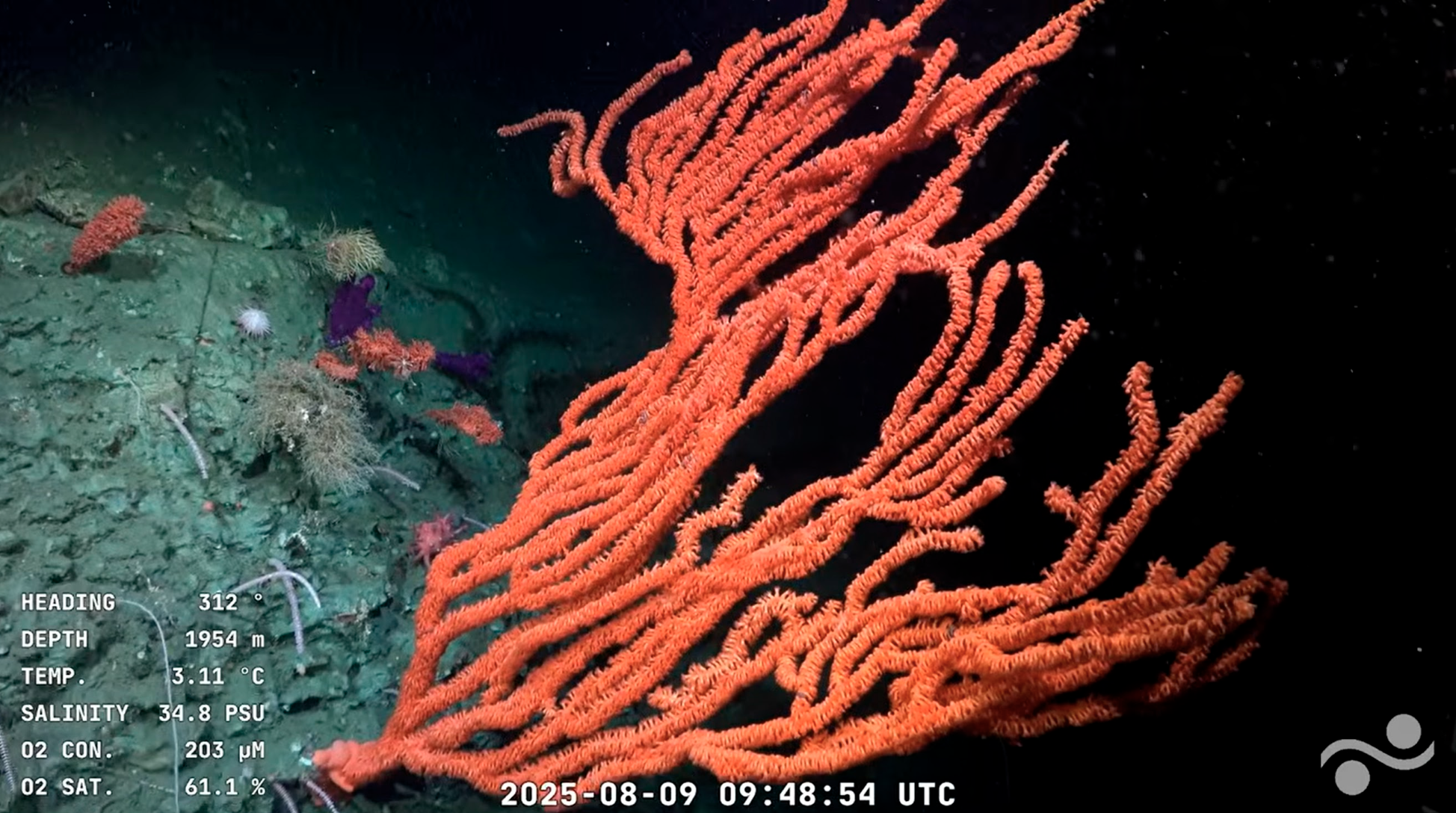
Photo Courtesy: ROV SuBastian / Schmidt Ocean Institute
A Bright Orange-Red Octocoral
Researchers also documented an octocoral (Orstomisis sp.) at a depth of approximately 1,954 meters.
The striking bright red-orange coral was photographed in its natural environment on the soft seafloor of the Mar del Plata Canyon. Its documentation provides important information about habitat-forming deep-sea coral communities, which can provide structure and shelter for other marine organisms.
The species was examined by taxonomists Ralf Cordeiro and Daniel Lauretta of CONICET.
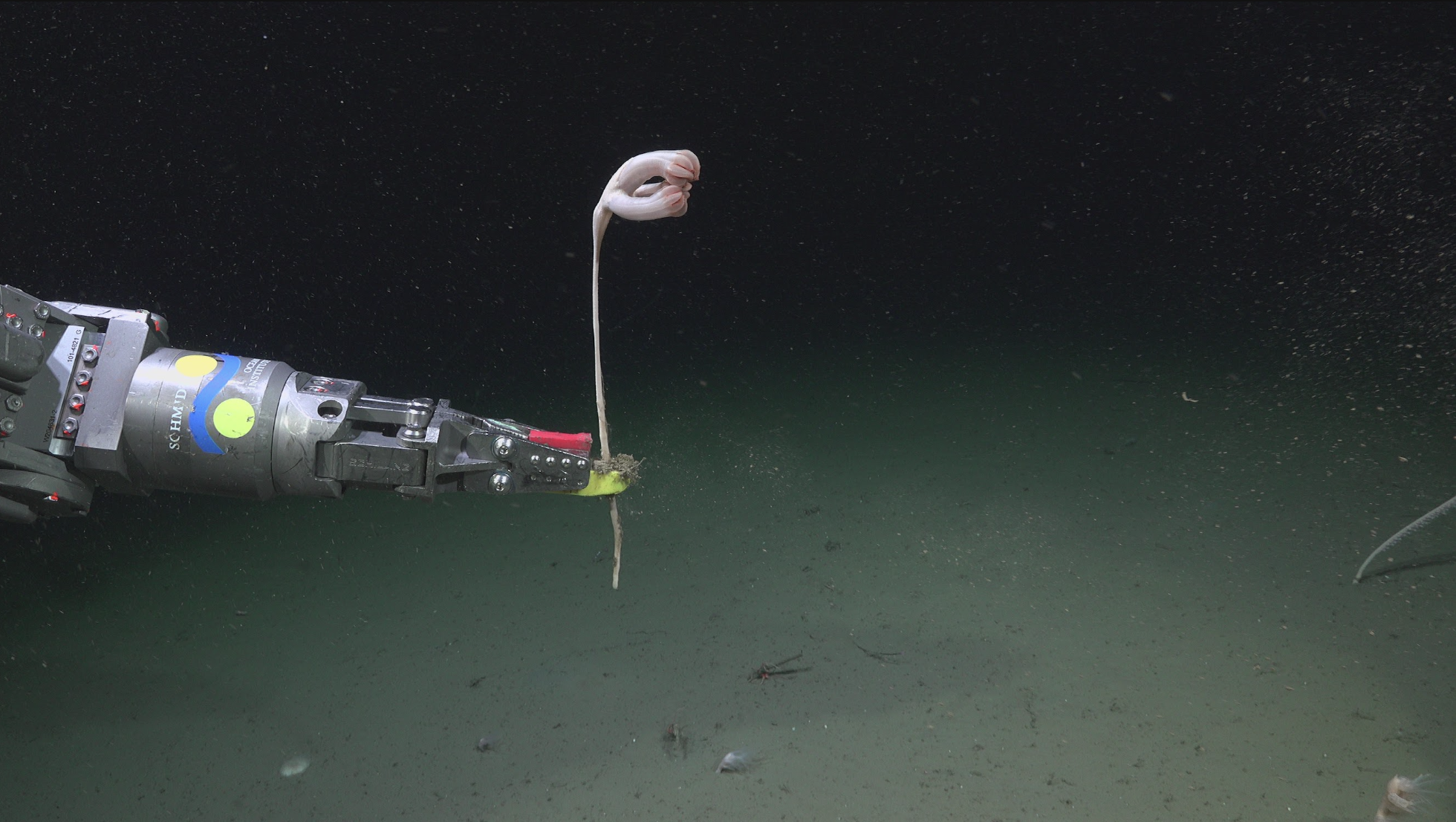
Photo Courtesy: ROV SuBastian / Schmidt Ocean Institute
Sea Pen Found on the Deep-Sea Floor
Another notable discovery was a sea pen (Pseudumbellula sp.), a colonial coral that was documented living on the deep ocean floor.
Researchers captured detailed imagery of the organism in its natural habitat before carefully collecting it using the robotic manipulator arm of ROV SuBastian.
The sea pen forms part of the 14 new cnidarian species identified during the workshop. The group includes octocorals, sea pens and stony corals, several of which could provide new insights into the ecosystems supported by Argentina’s deep-sea canyons.
The species was examined by Jessica Risaro of CONICET and Pablo Lopez-Gonzalez.
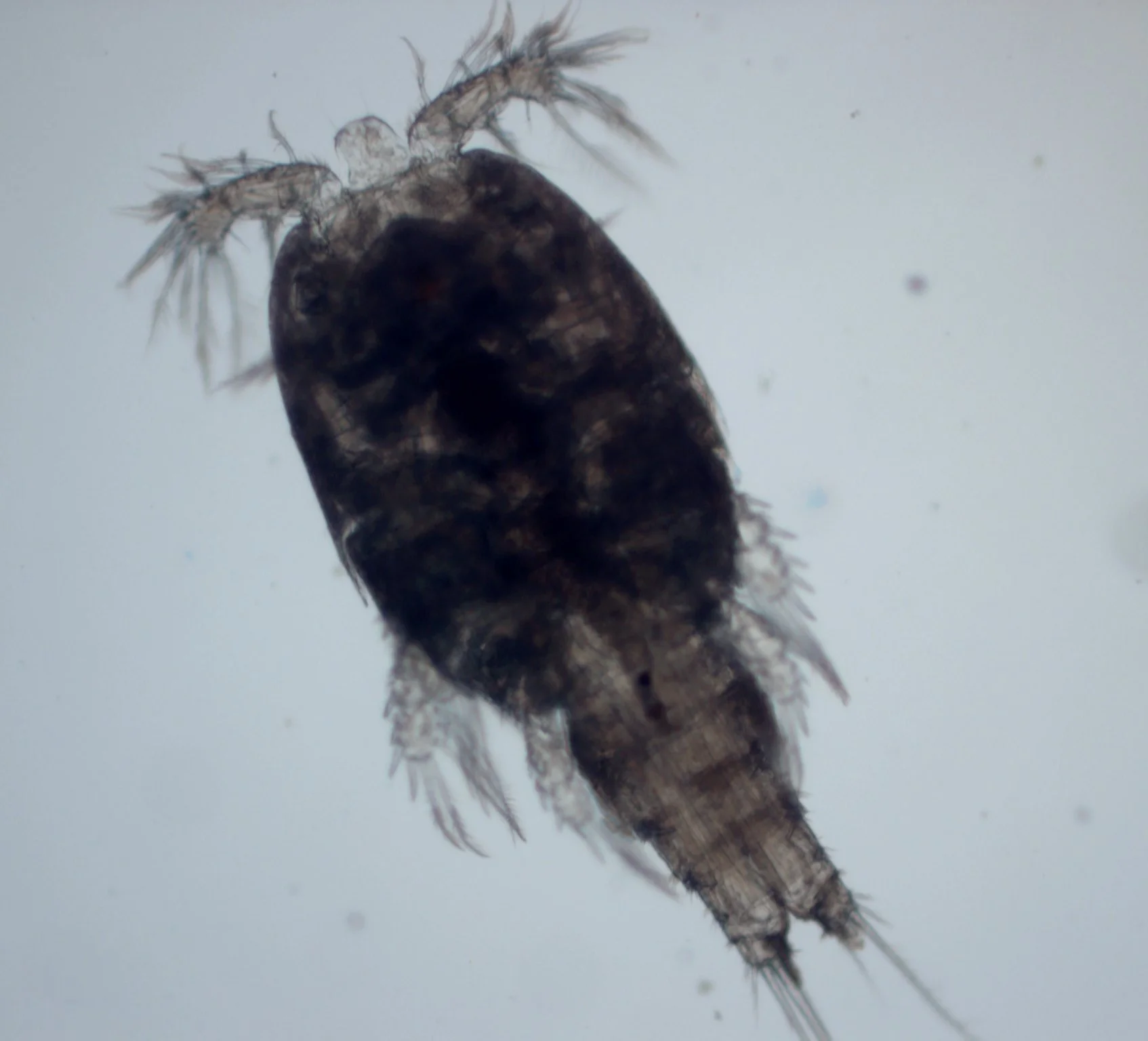
Photo Courtesy: The Nippon Foundation-Nekton Ocean Census / Schmidt Ocean Institute
Tiny Copepods Reveal Major Discoveries
Among the most significant findings were tiny crustaceans known as copepods, including Pseudotachidius sp.
These organisms were collected from depths ranging from approximately 1,909 to 2,625 meters in the Argentina Deep Basin and Mar del Plata Canyon.
Although copepods are small, they play important roles in deep-sea ecosystems. What made this discovery particularly notable was the sheer number of new species found within the group.
During the workshop, taxonomists examined only 10% of the copepod samples collected. Remarkably, every specimen examined was found to represent a species new to science, resulting in the identification of 20 new copepod species and one new genus.
The specimens were studied by Nancy Mercado Salas and Emanuel Pereira.
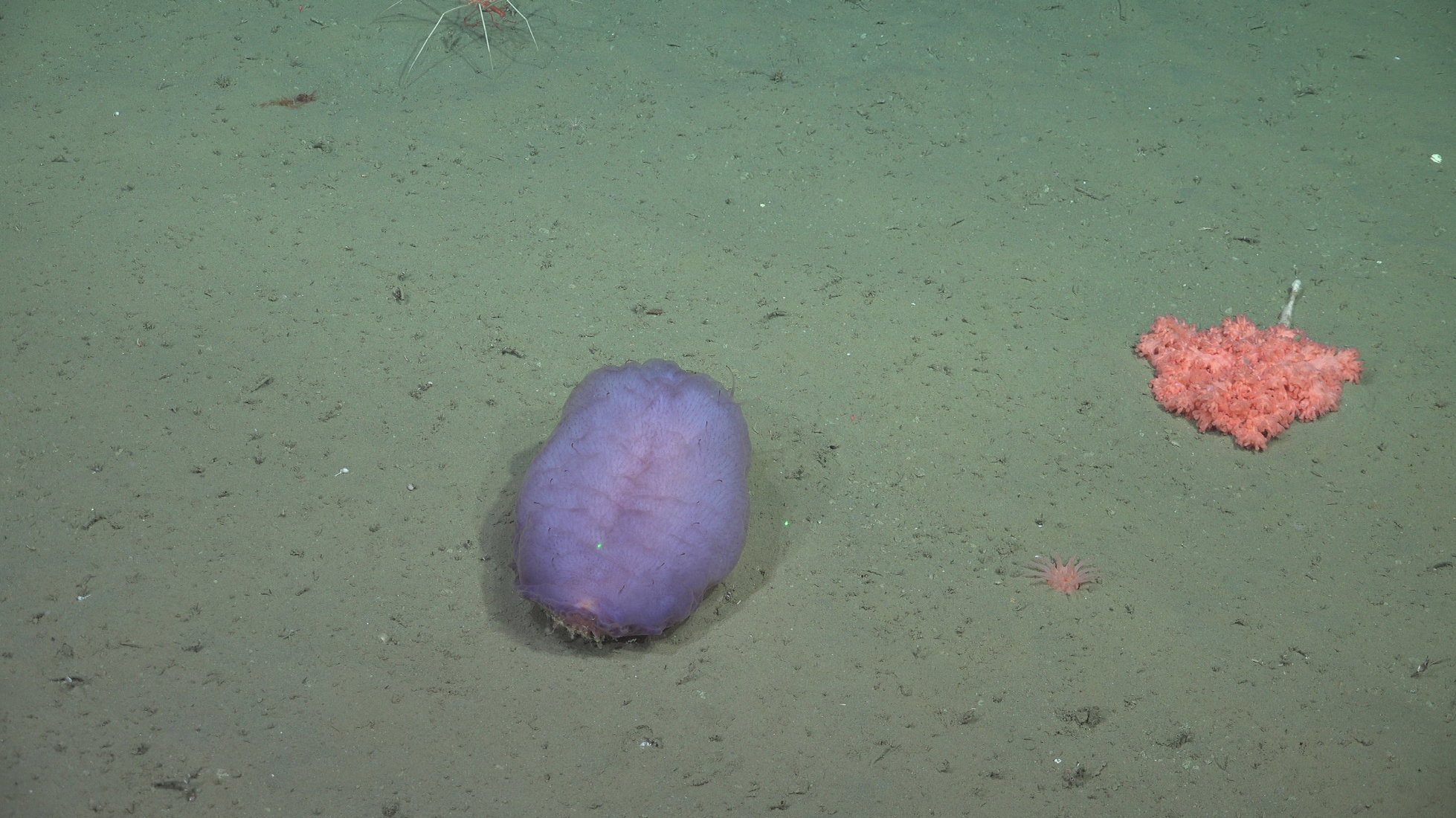
Photo Courtesy: ROV SuBastian / Schmidt Ocean Institute
Another New Sea Cucumber
Researchers also examined a bright purple holothurian (Benthothuria sp.) photographed resting on the seafloor of the Mar del Plata Canyon.
The specimen was analyzed alongside dozens of other echinoderms by international specialists during the Buenos Aires workshop. Its discovery forms part of the broader number of new sea cucumber and echinoderm species identified during the study.
The species was examined by Francisco Alonso Solís-Marín and Mariano Martinez of CONICET.
What the 57 Discoveries Reveal
The 57 newly identified species include 20 copepods, 22 echinoderms, 14 cnidarians and one scaphopod mollusc. Researchers also identified five new scientific genera, spanning corals, sea cucumbers and crustaceans.
The findings underscore how little is known about biodiversity in the deep ocean. By bringing specialists together to examine specimens collected through advanced underwater exploration, scientists were able to accelerate the process of identifying organisms that had never before been formally recognized.
The discoveries were also recorded through Ocean Census NOVA, an open-access platform designed to make information about newly discovered marine species accessible to researchers and the public.
For Argentina, the workshop also represents an investment in local scientific research. Specimens processed during the project, along with historical samples from earlier CONICET expeditions, will be preserved in national scientific collections, including the Museo Argentino de Ciencias Naturales “Bernardino Rivadavia” in Buenos Aires.
Scientists are already planning to continue exploring the region. A follow-up expedition is scheduled for February to March 2027, with researchers expecting that further exploration could uncover even more species and previously undocumented deep-sea ecosystems.
The latest discoveries serve as another reminder that even in an increasingly explored world, vast parts of the ocean remain largely unknown—and the deep sea may still hold thousands of species waiting to be found.