Nearly a century after their separation, a bronze sculpture at the University of Tokyo imagines the reunion that Hachikō and Professor Hidesaburō Ueno never got to experience, turning one of Japan’s most beloved stories of loyalty into a lasting reminder of love that never fades.
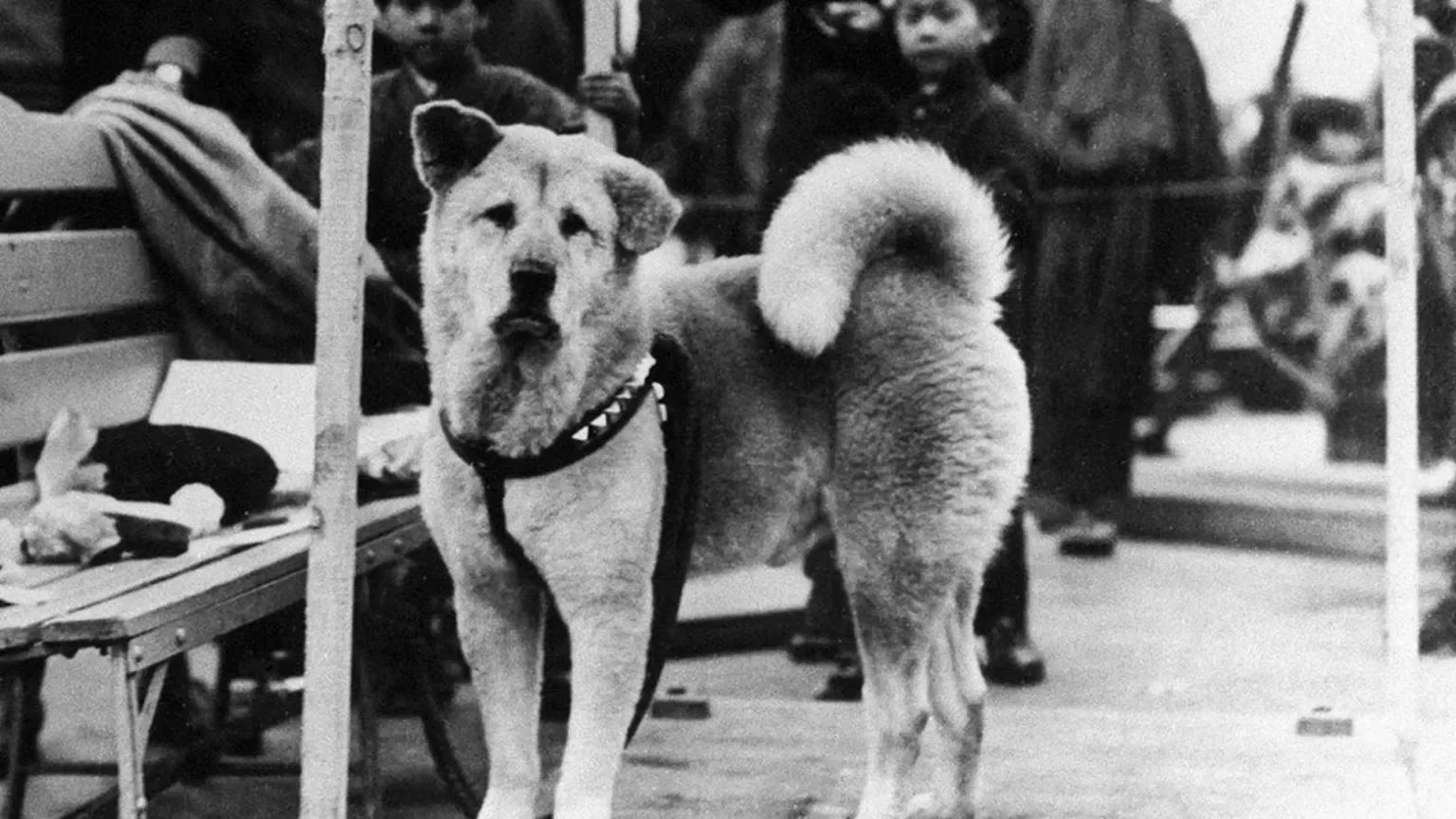
Photo Courtesy: Getty Images
Did you know that somewhere in Tokyo, Hachikō is no longer waiting?
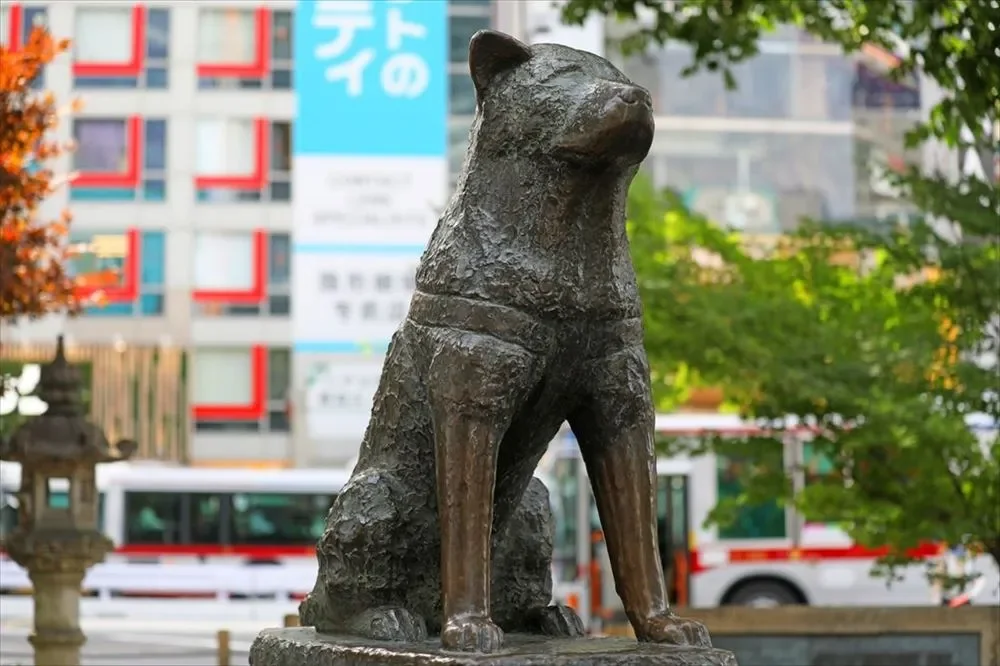
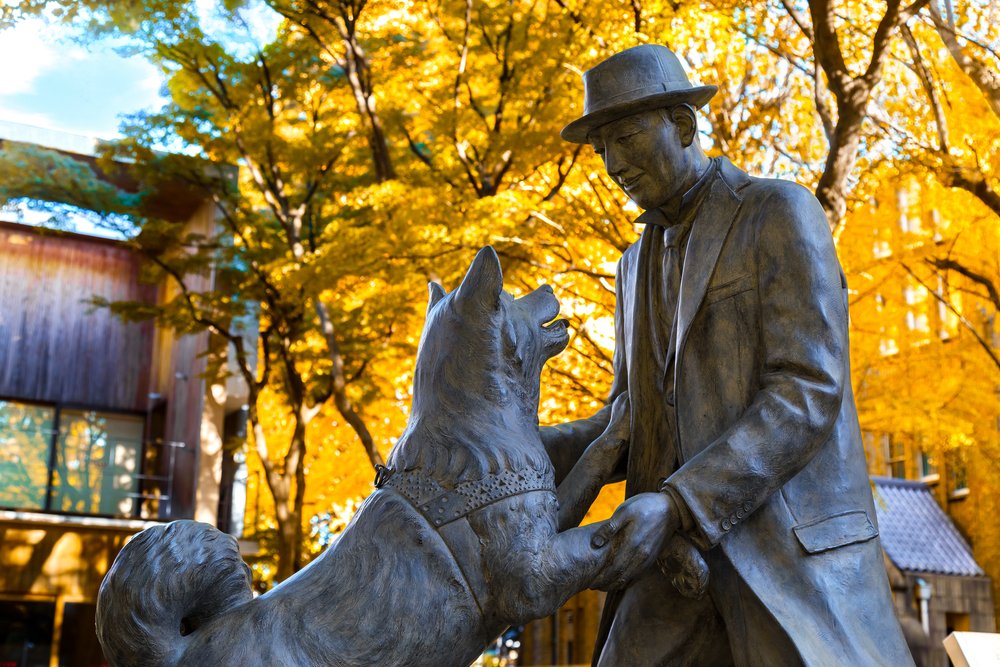
Away from the busy streets of Shibuya, where a familiar bronze statue of the loyal Akita dog continues to welcome commuters and visitors, another sculpture tells a different ending to his story. This time, Hachikō is not sitting alone, watching the crowds pass by. Instead, he is standing on his hind legs, joyfully greeting the man he spent years hoping to see again: his beloved owner, Professor Hidesaburō Ueno.
Located at the University of Tokyo’s Yayoi Campus, the bronze sculpture captures a reunion that never happened in real life. It offers a tender alternative to the story that has moved generations around the world, imagining what might have happened if the professor had returned home one more time.
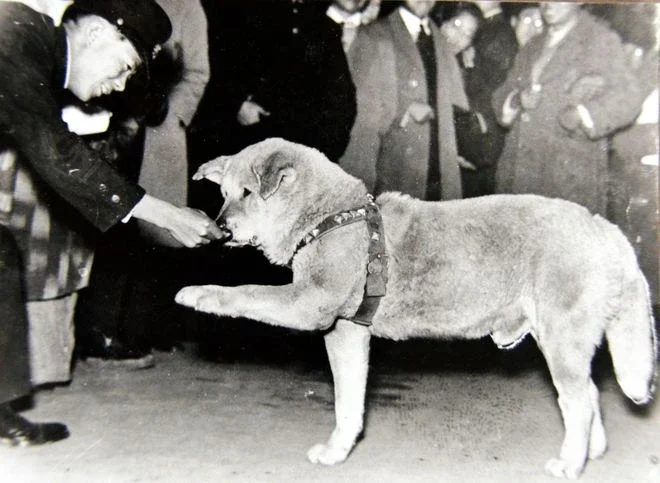
Hachiko is seen with Kenji Gomi’s father Kasaburo. Photo Courtesy of Kenji Gomi
A Friendship That Began With a Puppy
Hachikō was born in November 1923 in Ōdate, Akita Prefecture, Japan. In 1924, he was brought to Tokyo to live with Professor Ueno, an agricultural engineering scholar at what was then Tokyo Imperial University, now known as the University of Tokyo.
The two quickly formed a close bond. Professor Ueno cared deeply for the young Akita, while Hachikō became a familiar companion in his daily routine. The dog would accompany his owner on his journeys and greet him upon his return, eventually making their routine a symbol of devotion.
But their time together was unexpectedly short.
On May 21, 1925, Professor Ueno suffered a fatal cerebral hemorrhage while at the university. He was only 53 years old. He never returned home, leaving Hachikō without the person he had grown so attached to.
Despite the sudden loss, Hachikō continued returning to the places where he had once met his owner. His story would eventually become widely associated with Shibuya Station, where he was remembered for waiting for the professor to come home, day after day.
The Dog Who Became a Symbol of Unwavering Loyalty
What made Hachikō's story extraordinary was not simply that he returned to a familiar place, but that he continued looking for someone who would never come back.
His story gradually spread beyond the neighborhood. In October 1932, a newspaper article brought national attention to his devotion, attracting people who wanted to see the dog whose loyalty had touched the public. He became affectionately known as Chūken Hachikō, meaning "faithful dog Hachikō."
In 1934, while Hachikō was still alive, a bronze statue of him was erected outside Shibuya Station. Remarkably, Hachikō himself attended its unveiling, becoming part of the ceremony held in his honor.
He passed away on March 8, 1935, at approximately 11 years old. His remains were later preserved, with his taxidermied body displayed at the National Museum of Nature and Science in Tokyo. His story, however, continued to live on through generations of Japanese families and admirers around the world.
A Reunion 90 Years in the Making
For decades, the familiar image of Hachikō waiting at Shibuya Station remained the defining representation of his loyalty. But for the University of Tokyo, there was another part of the story worth telling: the bond between Hachikō and the professor who had once cared for him.
The idea for a second statue came from Professor Masaki Ichinose, who wanted to recognize Professor Ueno's connection to the university and give the pair a place in its history. The project eventually brought together a group of 14 members, with support from university faculty and donations through the UTokyo Foundation.
Rather than creating another statue of Hachikō sitting alone, the group envisioned something more personal: a joyful reunion between the dog and his owner.
Sculptor Tsutomu Ueda was commissioned to bring the concept to life. To capture the movement and expression of the scene, the team visited an Akita dog breeder and photographed dogs jumping up on people. These images served as references for the sculpture, while Ueda also developed a prototype of Professor Ueno using his wife as a facial model.
The result was a bronze artwork filled with movement and emotion. Hachikō stands on his hind legs, reaching up toward Professor Ueno, who welcomes him with a gentle expression.
On March 8, 2015, exactly 80 years after Hachikō's death, the statue was unveiled at the university's Yayoi Campus. It marked 90 years since the professor and his beloved dog were separated.
Among those who attended the ceremony was an elderly woman who had actually met and petted Hachikō when she was a child. An Akita dog resembling Hachikō was also present.
According to Professor Ichinose, some visitors even left coins at the statue, perhaps wishing for a reunion with someone they had lost themselves.
More Than a Statue, A Reminder of Love That Endures
Today, the sculpture stands as more than a tribute to a famous dog. It represents the kind of connection that remains meaningful even after time, distance, and loss.
There is something particularly moving about the contrast between the two Hachikō statues in Tokyo. At Shibuya Station, he remains seated, forever associated with the wait for a familiar face that never appeared. At the University of Tokyo, however, he is finally reunited with the person he loved.
The university itself describes the difference beautifully: while the Hachikō at Shibuya remains alone, the one on its campus expresses the joy of being reunited with his beloved guardian after 90 years apart.
There is also a deeper story behind the location. The Yayoi Campus is home to the university's Faculty of Agriculture, where Professor Ueno once worked. It is also where Hachikō's preserved internal organs are kept as part of the university's historical and scientific collections. In this way, the sculpture brings together not only their personal story but also the academic legacy of the man who helped shape agricultural engineering in Japan.
Perhaps that is what makes the statue so special. It does not change what happened or erase the sadness of their separation. Instead, it gives visitors the opportunity to imagine a moment that history never allowed: a beloved dog finally seeing his person come home.
And while Hachikō's real story ended nearly a century ago, his devotion continues to remind people everywhere that love is not measured by how long someone stays, but by the lasting impact they leave behind.
After all, some reunions may never happen in life, but they can live forever in the stories we choose to remember.