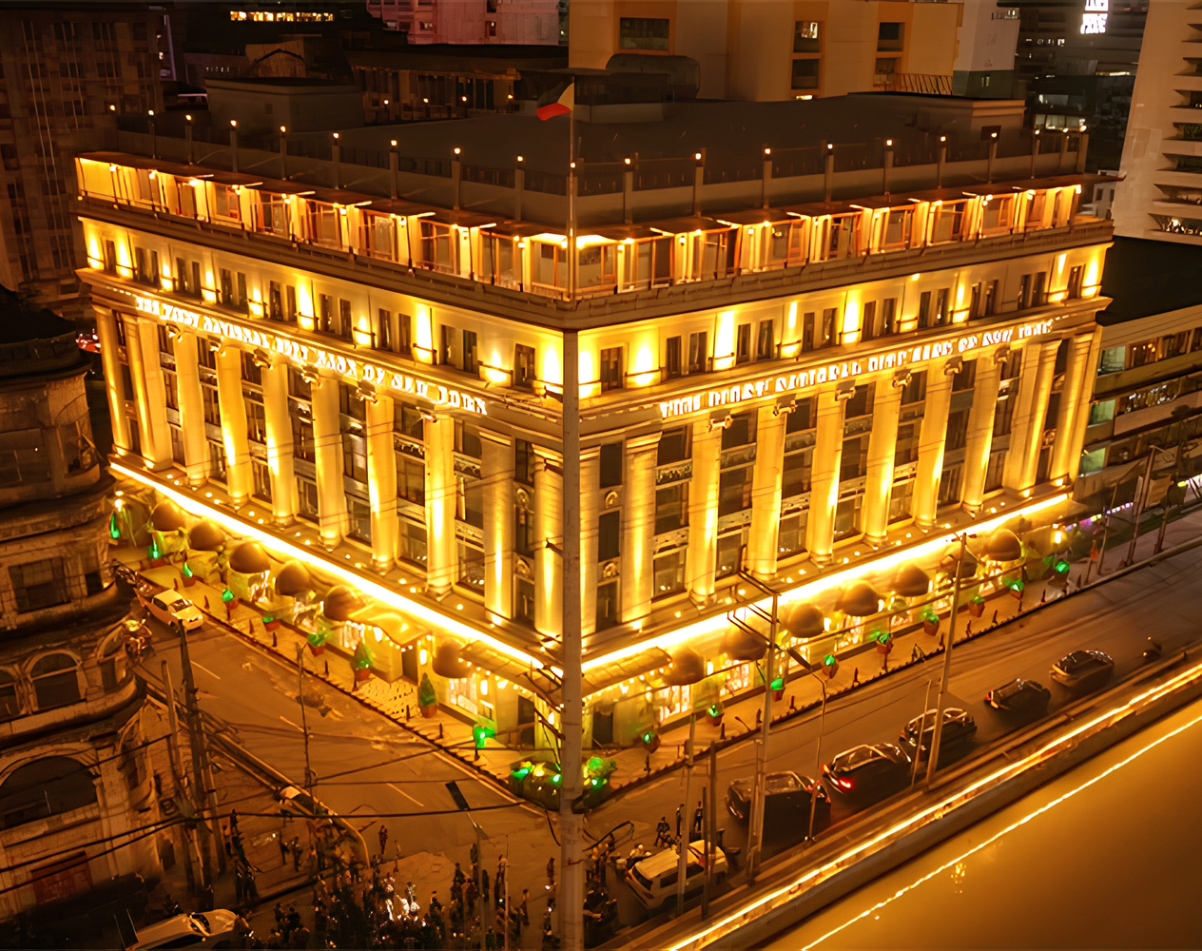
A piece of Manila’s architectural history is shining once again as the historic Juan Luna Building in Binondo unveils its restored facade, bringing renewed attention to one of the district’s surviving American-era commercial landmarks.
Originally completed in 1922 as the Pacific Commercial Company Building, the five-story structure has carried several names throughout its history, including the First National City Bank of New York Building and the Ayala Building. It stands at the corner of Juan Luna Street and Muelle de la Industria, an area that once formed part of Manila’s thriving financial and commercial center.
On February 19, 2026, Manila Mayor Francisco “Isko Moreno” Domagoso led the ceremonial lighting of the building’s restored facade, marking another step in the city’s efforts to preserve its architectural heritage and revitalize Binondo’s historic district. The initiative was made possible through a partnership between the Manila City Government and private stakeholders.
A landmark shaped by history
Beyond its renewed exterior, the Juan Luna Building carries a legacy that reflects Manila’s commercial growth during the early 20th century.
Designed by American architectural firm Murphy, McGill and Hamlin, the building features Beaux-Arts and Neoclassical influences, characterized by its classical columns, arched windows, decorative moldings, and imposing facade. These architectural elements reflect the grandeur and permanence associated with prominent banking institutions of its time.
The building was initially associated with the Pacific Commercial Company before housing the First National City Bank of New York. It was later acquired by Enrique Zobel in 1940 and became known as the Ayala Building, adding another chapter to its history as a major commercial address.
However, its journey has not been without challenges. The structure underwent renovations in 2007 and sustained damage during a fire that spread from a nearby building in May 2018. Its subsequent rehabilitation and restoration efforts sought to preserve its historic character while giving the landmark a renewed purpose.
Bringing heritage back into the spotlight
The restored facade and nighttime illumination are part of a broader effort to make Manila’s historic districts more visible and inviting to residents and visitors.
During the lighting ceremony, Domagoso also encouraged owners of other heritage properties, including the nearby El Hogar Building, to work with the local government on similar restoration and lighting initiatives.
For Binondo, the renewed glow of the Juan Luna Building represents more than an architectural facelift. It brings attention back to the district’s identity as a historic center of trade, banking, and commerce—where generations of stories remain embedded in its streets and structures.
As Manila continues to explore ways to preserve its historic landmarks, the Juan Luna Building stands as a reminder that restoring the past can also help shape the city's future.