Lake Lanao Is Millions of Years Older Than Human Civilization
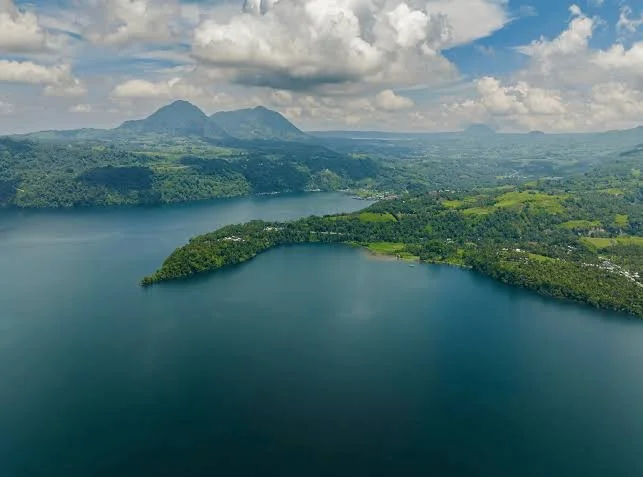
Photo Courtesy: Philippine World Expo Osaka
Hidden in the highlands of Lanao del Sur is a body of water whose history stretches back millions of years—long before the rise of cities, kingdoms, and the civilizations that would eventually shape human history.
This is Lake Lanao, the largest lake in Mindanao and the second-largest in the Philippines. It is recognized as one of the world’s ancient lakes, with its age estimated at around 10 million years in the World Lake Database, according to the Department of Science and Technology (DOST). Other scientific studies have placed its age at roughly 5.3 to 5.6 million years, reflecting the different estimates that have appeared in scientific literature.
Regardless of the precise figure, Lake Lanao is extraordinarily old—and its long geological history has helped create an ecosystem unlike any other.
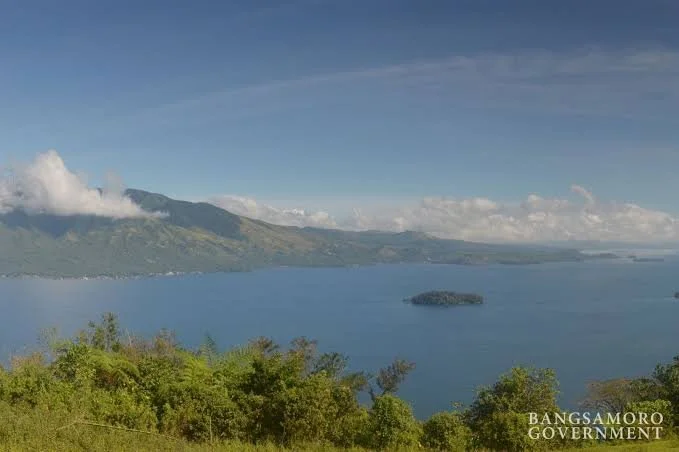
Photo Courtesy: BARMM
One of the World’s Ancient Lakes
Lake Lanao is classified among the world’s ancient lakes, which are bodies of water that have persisted for exceptionally long periods.
The lake has a surface area of roughly 350 square kilometers and reaches a maximum depth of about 112 meters. Its basin is associated with tectonic and volcanic processes that shaped the landscape of Mindanao over geological time.
Its longevity has also allowed evolution to unfold within the lake in remarkable ways.
For scientists, Lake Lanao became particularly significant because of its extraordinary collection of freshwater fish species that evolved within its waters.
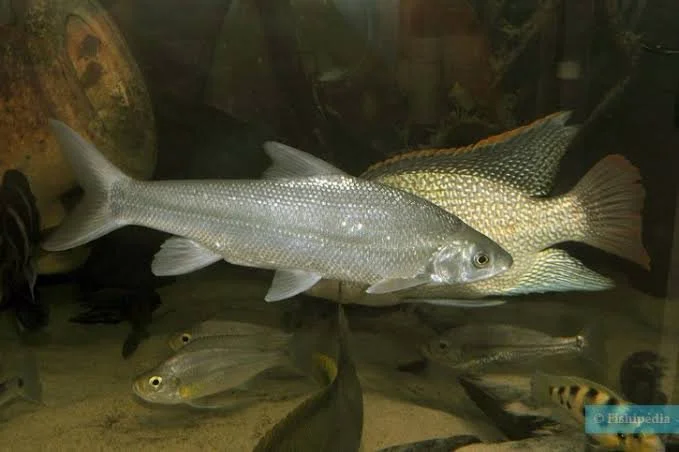
Photo Courtesy: Fishipedia
A Home to Species Found Nowhere Else
At one point, Lake Lanao was known for 18 endemic cyprinid fish species—freshwater fishes related to carps and minnows—that were found nowhere else in the world.
These fish became an important example of what scientists call a species flock, in which multiple closely related species evolve from a common ancestor and occupy different ecological niches.
However, the lake’s unique biodiversity has faced serious pressure.
Scientific surveys have documented a dramatic decline in its endemic fishes, linked to factors including overfishing, habitat changes, pollution, and the introduction of non-native species. A 2019 molecular study reported that only two endemic cyprinid species were then known to remain in the lake: Barbodes lindog and Barbodes tumba.
More recent research has continued to search for surviving endemic populations. In one DOST-National Research Council of the Philippines project, researchers used DNA barcoding to confirm the survival of Barbodes tumba, locally known as “pait,” in the Agus River system connected to Lake Lanao.
The findings underscore both the rarity of these species and the urgency of protecting what remains of the lake’s native biodiversity.
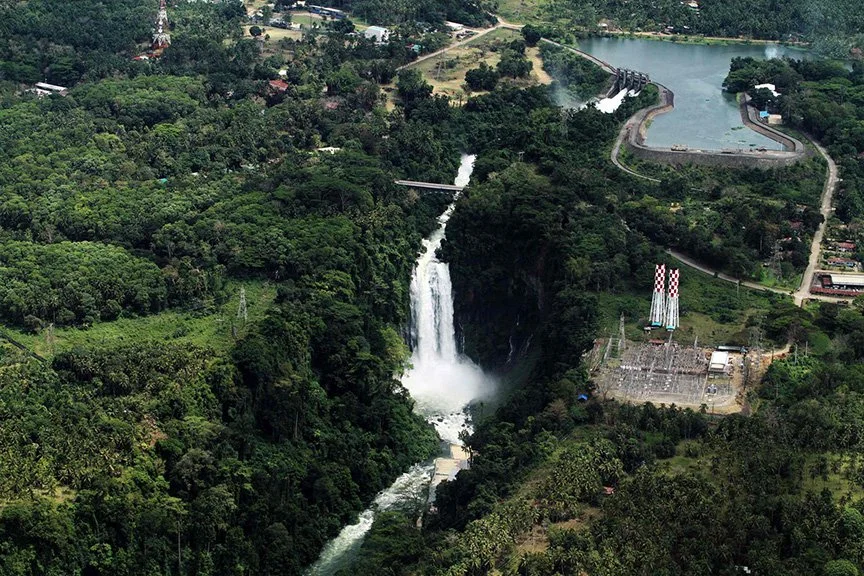
Photo Courtesy: Edge Davao
More Than an Ancient Ecosystem
Lake Lanao is not simply a geological and biological landmark.
For the Maranao people, whose communities have lived around the lake for generations, it is deeply connected to culture and everyday life.
The lake has traditionally provided food and water and supported livelihoods, transportation, religious practices, and other community activities. Philippine government sources describe Lake Lanao as an important part of Maranao culture and identity.
Its waters also feed the Agus River, which flows toward Iligan Bay and is connected to the Agus hydroelectric power system—giving the lake importance beyond its ecological and cultural value.
In other words, Lake Lanao is simultaneously an ancient natural archive, a source of livelihood, a cultural landscape, and an important component of Mindanao’s water and energy systems.
An Ancient Lake Facing Modern Threats
Despite its remarkable age, Lake Lanao is not immune to modern environmental pressures.
Studies have identified invasive and introduced species, pollution, human activities, and other environmental changes as threats to its ecosystem. Government environmental agencies have also emphasized the need for continued monitoring because of concerns including pollution, climate change, and invasive species.
In 2025, the Provincial Government of Lanao del Sur announced its support for a Mindanao State University-led research initiative focused on the conservation and management of Lake Lanao’s endemic cyprinids. The project aims to identify and preserve remaining endemic species while examining ecological threats and the socioeconomic conditions of communities around the lake.
These efforts are particularly important because the disappearance of an endemic species does not simply mean losing another fish. It can mean losing a species that evolved in that ecosystem over thousands—or potentially millions—of years.
A Living Record of Mindanao’s Natural History
Lake Lanao’s greatest story may be its longevity.
Whether measured at around 10 million years, as cited by the World Lake Database, or within the younger estimates proposed by some scientific studies, its history still predates human civilization by an almost unimaginable span of time.
The lake has endured geological changes, witnessed the evolution of unique species, and become inseparable from the culture of the Maranao people.
Today, its ancient waters face challenges created in a remarkably short period of human history.
Protecting Lake Lanao therefore means protecting more than a lake. It means safeguarding a rare evolutionary record, a culturally significant landscape, and a natural heritage that has survived for millions of years.