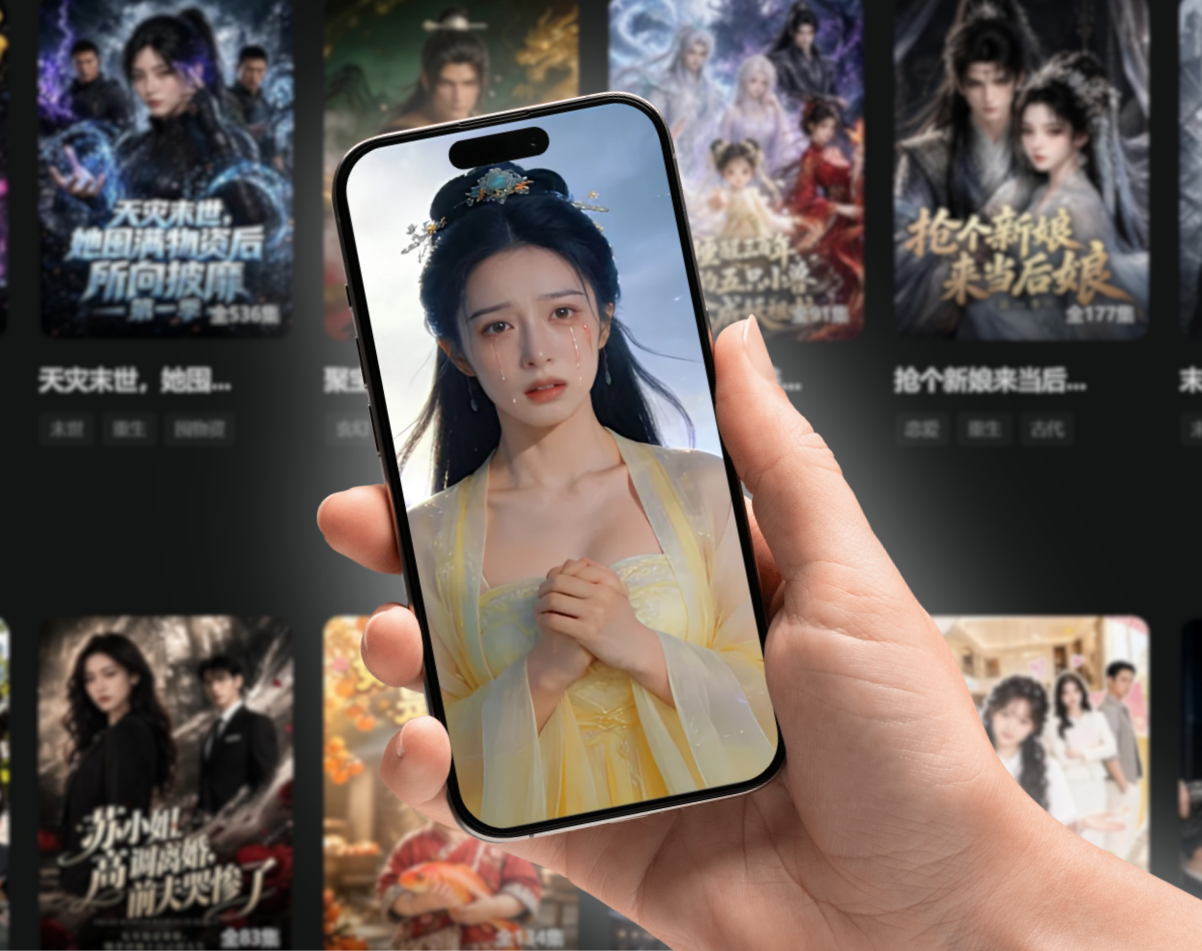
What if the next big drama you binge-watch has no actors, no filming locations, and no traditional production crew?
Artificial Intelligence (AI) is changing the entertainment industry, and AI-generated dramas are quickly becoming one of the most talked-about developments in digital storytelling.
Already making waves in China, AI-powered microdramas are taking short-form entertainment to another level. These bite-sized episodes, often lasting just one to two minutes, feature everything from romance and revenge to fantasy and action, with characters, settings, and entire scenes generated using artificial intelligence.
The numbers are particularly striking. According to the China Netcasting Services Association, 367,000 microdramas were released across Chinese platforms in the first half of 2026, with more than 74% reportedly AI-generated, as reported by the South China Morning Post.
More recent figures released by China's National Radio and Television Administration paint an even bigger picture. As reported by Xinhua on November 13, approximately 550,000 micro and short dramas were released nationwide in the first 10 months of 2026, with more than 94% made using AI technologies.
One example is Armed into the Song Dynasty, an AI-generated short drama that premiered on August 22, 2026. The series has reportedly expanded to 10 seasons and 1,000 episodes, with cumulative views exceeding four billion. Each episode runs for less than two minutes.
THE APPEAL OF AI-GENERATED ENTERTAINMENT
For production companies, AI offers an entirely different approach to creating content.
Traditional productions require actors, filming locations, equipment, production crews, and extensive post-production work. With AI, some of these processes can be significantly reduced, allowing smaller teams to produce content faster and at a lower cost.
According to Xinhua, a Chinese director who transitioned from live-action to AI-based production said AI dramas can cost around one-tenth as much as traditional productions when comparable quality is achieved.
The technology also opens creative possibilities for stories involving elaborate fantasy worlds, historical settings, and large-scale action sequences that would otherwise require substantial production budgets.
For audiences, this means more content, more genres, and potentially more stories available at their fingertips.
BUT CAN AI REPLACE THE HUMAN TOUCH?
Despite its growing popularity, AI-generated entertainment also raises important questions about the future of creative work.
Can AI-generated characters deliver the same emotional depth, authenticity, and chemistry as real actors? Can a machine-generated performance make audiences laugh, cry, or genuinely connect with a character?
There are also concerns about the people behind traditional productions. Actors, screenwriters, directors, cinematographers, editors, and production crews could face increasing competition as companies explore cheaper AI-powered alternatives.
Quality remains another challenge. AI-generated productions can struggle with character consistency, realistic human behavior, visual continuity, and emotionally complex scenes.
China's entertainment industry is also facing growing concerns over copyright, content quality, and the protection of creative rights as AI production expands.
As reported by the South China Morning Post, some industry professionals have warned that the growing volume of AI-generated content could lead to repetitive storylines and an oversupply of productions that prioritize speed over originality.
THE FUTURE OF ENTERTAINMENT
AI is no longer just a behind-the-scenes production tool. It is becoming part of the entertainment itself.
While AI-generated dramas are gaining ground, their rise does not necessarily mean the end of traditional filmmaking. Instead, the industry may be heading toward a future where human creativity and artificial intelligence work alongside each other.
The bigger question is how entertainment companies will balance technological innovation with originality, artistic expression, and the people whose talents bring stories to life.
After all, technology may be able to generate characters, settings, and dialogue, but making an audience feel something remains the real test of storytelling.
ITM ASKS: Would you binge-watch a drama made entirely by AI, or do you still prefer the magic of real actors?