Photo Courtesy: Art Images/Hulton Fine Art Collection/ Getty Images
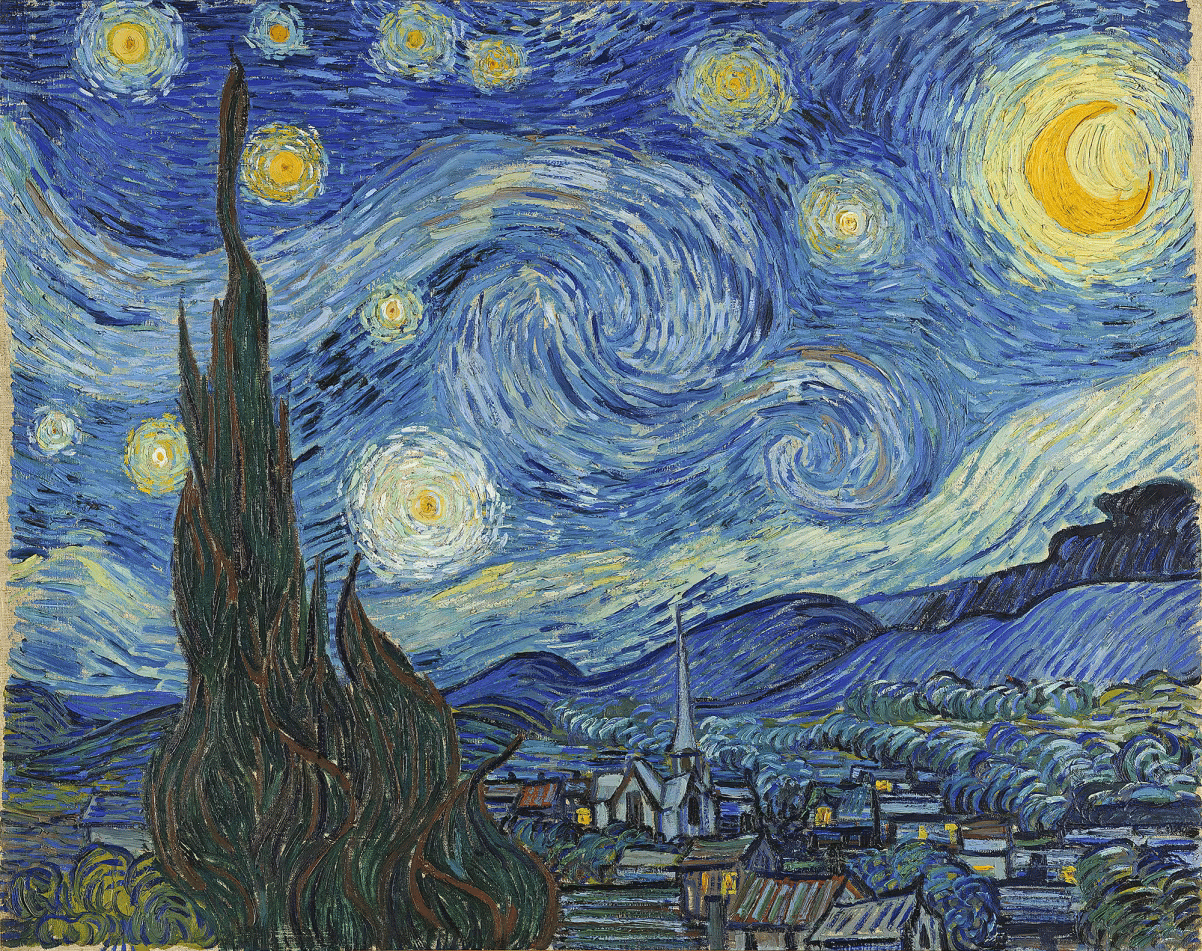
Researchers identified similarities between the painting’s star patterns and a celestial arrangement that may have appeared over southern France on July 22, 1889.
Vincent van Gogh’s iconic masterpiece The Starry Night may have been inspired by an actual night sky, according to a new study that uses astronomical simulations and historical records to examine the celestial details behind the famous painting.
Published in the journal Scientific Reports on October 22, 2026, the study suggests that the painting’s arrangement of stars, the Moon, and Venus closely resembles the predawn sky over Saint-Rémy-de-Provence, France, on July 22, 1889.
For decades, The Starry Night has been widely associated with Van Gogh’s imagination, memories, and distinctive interpretation of the world around him. The new research, however, proposes that direct observation of the sky may have played a greater role in the painting’s composition than previously thought.
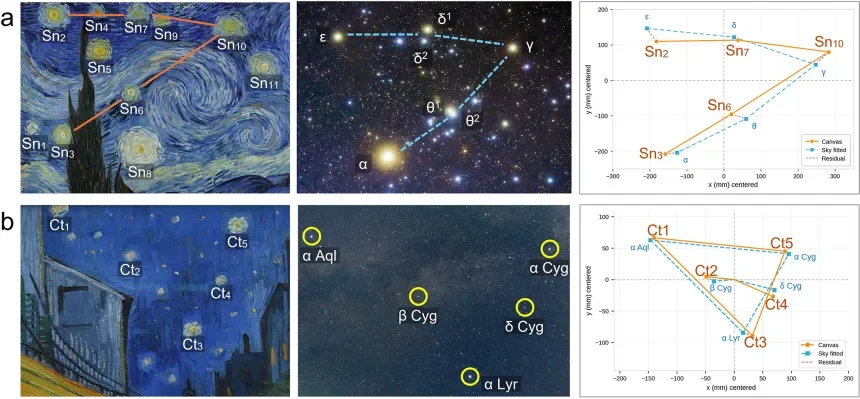
Photo Courtesy: Kim et al., Scientific Reports (2026)
Researchers trace the painting’s celestial details
The study was conducted by researchers from South Korean space science company SLLAB and Kyung Hee University in Seoul. They examined the painting’s celestial arrangement and compared it with astronomical simulations of the sky above the landscape near the Saint-Paul-de-Mausole asylum, where Van Gogh stayed for approximately a year.
Using a separate Van Gogh drawing to identify the landscape, the researchers located the likely viewpoint southwest of the asylum in southern France.
They then simulated the sky over that location during the early hours of July 22, 1889. The resulting arrangement showed the crescent Moon in the upper-right portion of the sky and Venus toward the lower-left, with the Hyades star cluster positioned between them.
These placements bear similarities to the celestial features depicted in The Starry Night.
The Hyades, a star cluster in the constellation Taurus, is known for its distinctive V-shaped arrangement of stars. Researchers used a statistical method called Procrustes shape analysis to compare the relative positions of five prominent stars in the painting with the cluster’s arrangement in the simulated sky.
The method accounts for differences in position, size, and rotation, allowing researchers to compare the overall shape of the star patterns rather than their exact placement.
Their findings suggest that the arrangement may preserve recognizable features of the Hyades, even though Van Gogh altered the size, orientation, and appearance of celestial objects through his artistic style.
Why July 22, 1889, matters
The proposed date differs from the commonly accepted timeline for the painting’s creation.
The Museum of Modern Art in New York, which houses The Starry Night, dates the work to mid-June 1889. This timeline is associated with a letter Van Gogh wrote to his brother Theo around June 18, in which he mentioned a new study of a starry sky.
However, the researchers argue that the Moon’s appearance and the positions of the stars provide reasons to consider a later date.
Around June 19, 1889, the Moon was close to full, according to the study, while the Hyades and Venus did not form the same prominent predawn arrangement proposed for July 22. On the later date, the Moon appeared closer to the crescent shape shown in the painting, while the star cluster rose in the eastern sky alongside Venus.
The researchers also revisited historical letters and weather records to reassess the timeline of Van Gogh’s health and painting activity during that period.
Their analysis raises the possibility that the artist began developing the composition in June but completed or revised it later. However, the study does not establish precisely when Van Gogh began painting or whether he returned to the canvas after an initial period of work.
Experts urge caution in interpreting the findings
Although the study offers a new way of examining the painting, experts have cautioned against treating the proposed date as definitive.
Yongxiang Huang, an associate professor at Xiamen University who was not involved in the research, described the study’s approach as a fresh perspective that combines astronomical modeling, historical weather information, and correspondence.
However, Huang noted that celestial arrangements depicted on canvas must be interpreted carefully. Artists may alter the positions, proportions, and orientations of objects for aesthetic or expressive reasons, making it difficult to establish an exact date from astronomical coordinates alone.
Ulrike Kuchner, an astronomer and researcher working across art and science, also described the research as an interesting investigation. She pointed out that Van Gogh may have combined observation with artistic freedom, including potentially altering the Moon’s appearance to suit his composition.
The researchers likewise acknowledge limitations in the available historical weather records, which predate standardized observation practices. Astronomy alone cannot determine the sequence of the artist’s brushstrokes or establish whether the painting was completed in one sitting or revised over time.
A closer look at art and science
The study also examined another Van Gogh work, Café Terrace at Night, painted in 1888. Through a similar statistical comparison, researchers found that its star arrangement could correspond to the Summer Triangle, another recognizable pattern in the night sky.
Together, the findings highlight how astronomical methods can offer additional perspectives on works of art, while also showing the limits of using scientific measurements to interpret artistic choices.
Rather than proving that The Starry Night is a precise record of a single night, the research suggests that Van Gogh may have drawn from observable celestial patterns and transformed them through his distinctive brushwork and imagination.
The painting’s enduring appeal may lie in precisely that intersection: a recognizable natural world reshaped into a deeply personal artistic vision.