The Walls of Intramuros: What They Were Really Built For
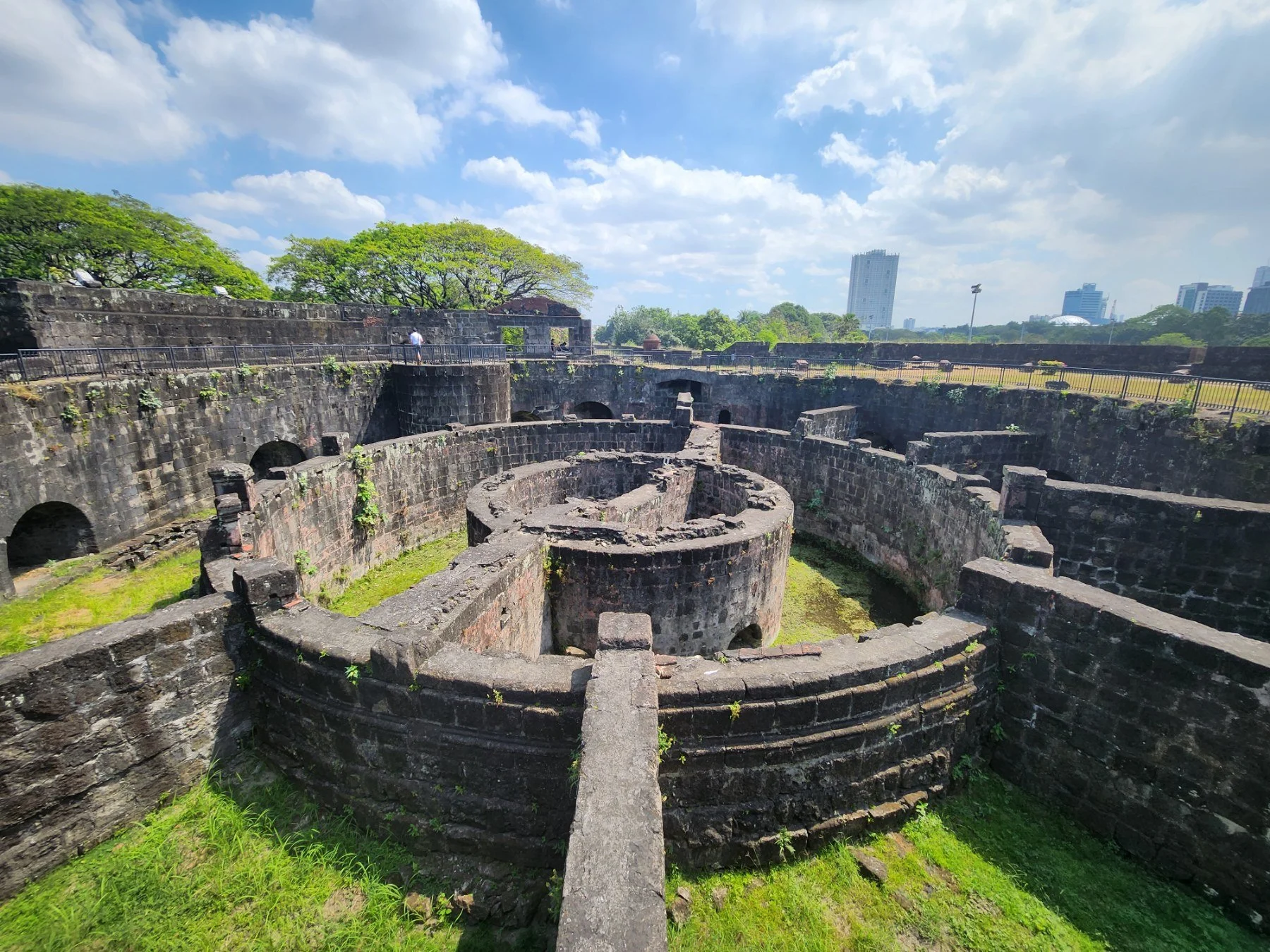
For many, Intramuros is a picturesque escape in the heart of Manila—its cobblestone streets, centuries-old churches, stone structures, and massive walls offering a glimpse into the country’s colonial past. But behind the postcard-like views is a history shaped by defense, power, conflict, and destruction.
The walls of Intramuros were not built simply to define a historic district. They formed part of a massive defensive system designed to protect Manila’s political, military, and religious center during Spanish colonial rule.
From Maynila to the Walled City
Before Intramuros became the Spanish colonial capital, the area was part of the settlement of Maynila associated with Rajah Soliman. In 1571, Spanish conquistador Miguel López de Legazpi established the new Spanish city of Manila on the site. The Spanish initially relied on wooden fortifications, including the structure that eventually became Fort Santiago.
The need for stronger defenses became apparent as Manila grew in strategic importance. Its location at the mouth of the Pasig River provided access to Manila Bay and made the city an important military and commercial center.
In 1574, the Chinese pirate and warlord Limahong launched an attack on Manila. Although the Spanish successfully repelled the assault, the attack exposed the weaknesses of the existing wooden defenses. The Spanish subsequently began replacing them with more durable stone fortifications.
By 1590, Manila’s wooden fortifications were being rebuilt in stone. According to the Intramuros Administration, the walls and fortifications of the Walled City were constructed and developed from 1590 to 1825, evolving over more than two centuries as military needs and defensive technology changed.
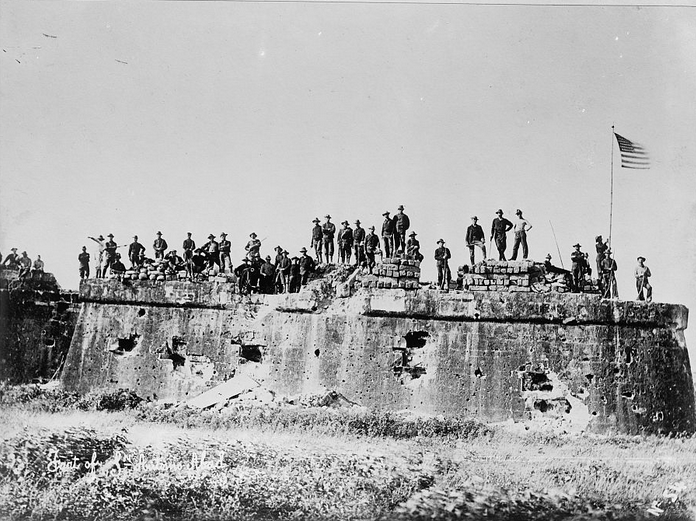
Photo Courtesy: Origins
Why Were the Walls Built?
At their most basic level, the walls were built for defense.
The fortified city was intended to protect the institutions and inhabitants located within it. Fortifications included thick stone walls, gates, bastions, redoubts, moats, and other defensive structures positioned around the city.
The strategic location of Intramuros meant that its defenses had to account for possible attacks from both land and water. Fort Santiago, positioned near the mouth of the Pasig River, became Manila’s primary military fortress. Other structures, such as the Baluarte de San Diego and Baluartillo de San Francisco Javier, helped defend the city’s bayside and river approaches.
Fort Santiago itself began as a wooden fort in 1571 before being rebuilt in stone between 1589 and 1592 using volcanic tuff, commonly known as adobe. Its strategic position allowed it to control access near the Pasig River and made it a key military headquarters for successive foreign powers.
The fortification system therefore served more than one purpose: it was a military shield, a controlled gateway into the colonial capital, and a physical expression of Spanish authority.
Who Lived Inside the Walls?
Intramuros became the administrative and religious heart of Spanish Manila.
The city housed important government institutions and became the center of Catholic ecclesiastical authority in the Philippines. The Intramuros Administration describes it as the capital of the Spanish East Indies from 1571 to 1898 and the center of the Catholic hierarchy and missionary activity in the region.
Within the fortified district were government buildings, churches, convents, schools, residences, military facilities, and other institutions associated with colonial Manila.
Intramuros was also socially distinct from the settlements outside its walls. While the city contained the colonial government and many religious institutions, communities developed beyond the walls, including Binondo, Tondo, Santa Cruz, Quiapo, and other areas that eventually became part of the expanding Manila urban landscape. By the late 19th century, Manila had grown well beyond the physical limits of the Walled City.
The walls consequently represented not only military boundaries but also the political and social organization of colonial Manila.
The Walls Were Never Static
The fortifications of Intramuros changed repeatedly over the centuries.
Earthquakes, military attacks, technological developments, and changing defensive requirements led to repairs, additions, and modifications. Baluarte de San Diego, for example, evolved from an earlier circular tower known as the Torre de Nuestra Señora de Guia. The tower was built in 1586–1587, but structural problems led to its upper portion being demolished. Its remaining base was incorporated into the Baluarte de San Diego, which became part of the city's defensive system.
Other fortifications were strengthened following military conflicts. Baluartillo de San Francisco Javier, for instance, was designed to defend Fort Santiago and the mouth of the Pasig River against attacks coming from Manila Bay.
These structures show that Intramuros was not simply a city surrounded by one continuous wall. It was an interconnected defensive landscape designed around Manila’s geography and the military technology of its time.
When the Walled City Faced Its Greatest Destruction
Centuries after the walls were built, Intramuros became one of the major centers of destruction during the Battle of Manila in 1945.
The battle lasted from February 3 to March 3, 1945, during the final months of World War II. The fighting devastated Manila, with widespread destruction caused by Japanese forces and American artillery. The Intramuros Administration describes the battle as one of the most destructive urban battles of the Pacific War, resulting in extensive damage to the city's buildings and cultural heritage.
Intramuros was particularly devastated.
Many of its churches, government buildings, homes, and other historic structures were destroyed or severely damaged. Fort Santiago, which had served as a military headquarters and prison under different occupying powers, was also heavily damaged. Its gate remained in ruins for decades before restoration efforts began.
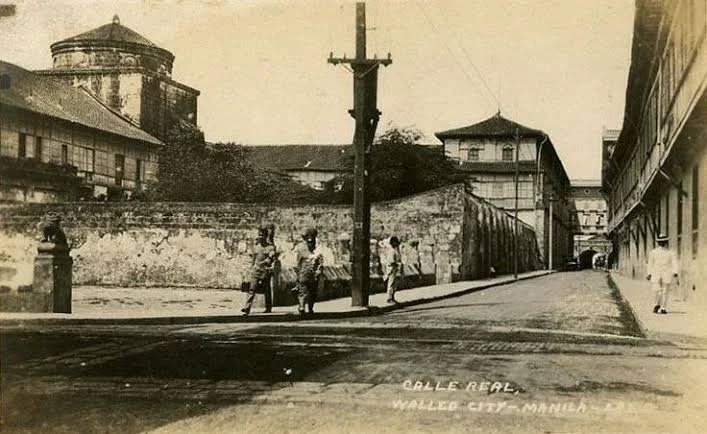
The damage extended to other sections of the fortification system. Baluartillo de San Francisco Javier was heavily destroyed during the battle and was eventually restored in the 1950s. Puerta Real was also heavily bombarded, suffering extensive damage before later restoration.
The result was a profound transformation of the Walled City. Much of the Intramuros that existed before the war was gone.
From Ruins to Heritage
The destruction of 1945 could have marked the end of Intramuros as a historic district. Instead, subsequent decades saw efforts to document, protect, and restore what remained.
The Intramuros Administration was established in 1979 through Presidential Decree No. 1616, with a mandate centered on the orderly restoration, development, and administration of Intramuros. Its charter specifically recognizes the area as an important historic landmark and provides regulatory protection for its architectural and historic character.
Today, restoration and conservation continue to shape the Walled City.
The Intramuros Administration maintains the Registry of Intramuros Cultural and Historical Properties (RICH), a comprehensive database documenting properties within Intramuros. The registry includes declared cultural properties and monuments and serves as a reference for planning, policy implementation, and understanding the district's historical and cultural landscape.
The Administration also regulates alterations and development within Intramuros, including work involving historic stone walls, structures, facades, and other elements of the district's built heritage.
More Than Just a Wall
Today, visitors may see the walls as part of a scenic walk through Manila's past. But every stone reflects a much more complicated history.
They were built to defend a colonial capital. They enclosed government and religious institutions. They witnessed attacks, occupations, earthquakes, and political change. And during the Battle of Manila, they became part of a city devastated by one of the most destructive episodes of World War II in the Philippines.
What remains today is therefore more than an architectural attraction.
The walls of Intramuros are physical evidence of Manila's transformation across centuries—from the precolonial settlement of Maynila, to the fortified capital of the Spanish East Indies, to a city devastated by war, and finally to a heritage district undergoing continuing conservation.
They survived not because they were untouched by history, but because history left its marks on them.
And that may be what makes the walls of Intramuros worth looking at differently: they were built for survival, and centuries later, their survival has become part of the story they preserve.