PHOTO COURTESY: IUCN NL
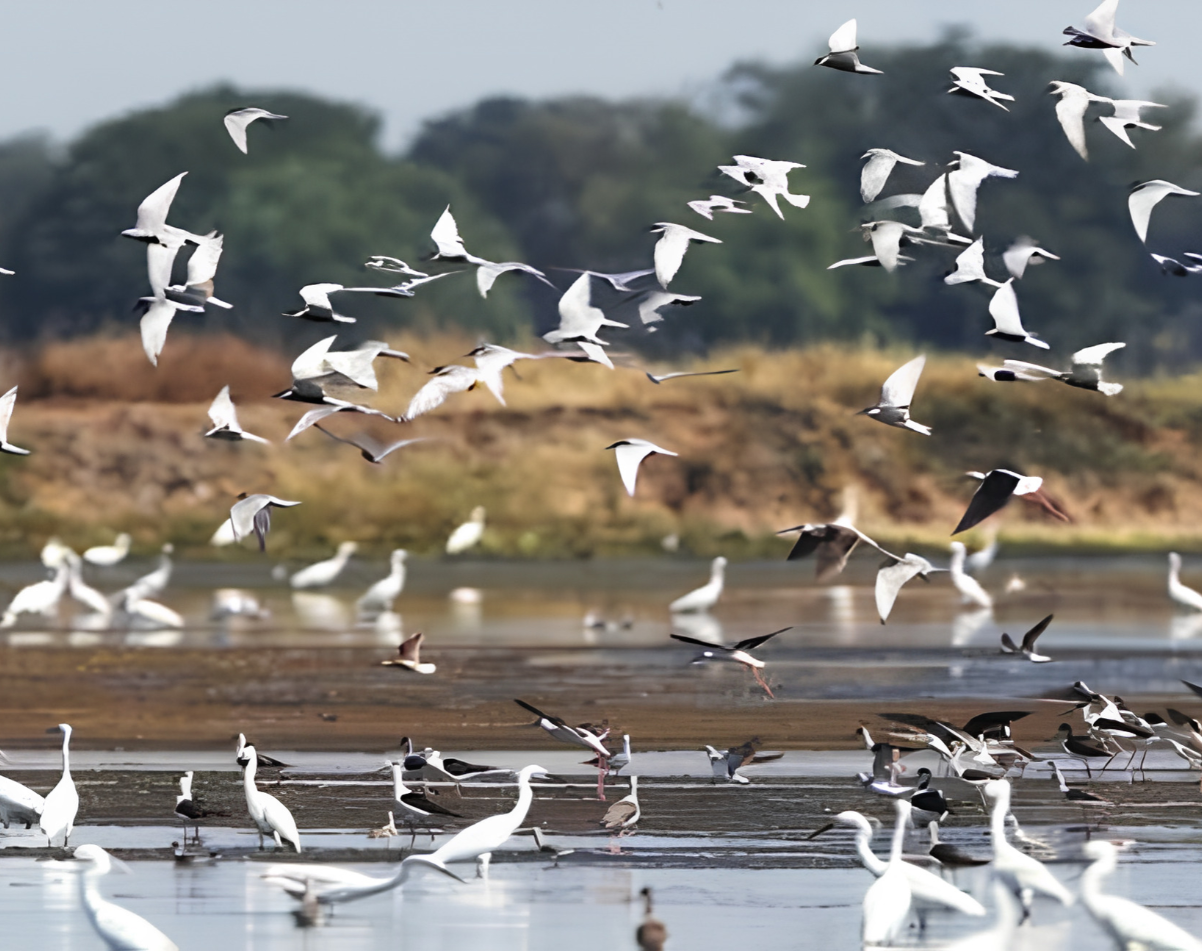
Beyond its famous sunsets and coastal views, Manila Bay serves as an important refuge for migratory birds, providing essential feeding and resting grounds for species traveling thousands of kilometers across the East Asian–Australasian Flyway.
Manila Bay is more than just a coastal landmark. Each year, its wetlands and mudflats become an important destination for thousands of migratory waterbirds seeking food, shelter, and a place to rest during their long-distance journeys.
The bay can host an estimated 170,000 to 200,000 waterbirds during the Northern Hemisphere's midwinter season, with more than 60 migratory species recorded. Among them are Black-tailed Godwits (Limosa limosa), which have been observed gathering by the hundreds along the mudflats of Bulacan.
But what makes Manila Bay an important destination for these birds?
Why Do Migratory Birds Travel to Manila Bay?
Every year, migratory birds travel between their breeding grounds in the Northern Hemisphere and warmer non-breeding areas farther south. This seasonal movement is driven by changing temperatures, daylight hours, and the availability of food.
As winter approaches in their breeding regions, many birds move south to find more favorable conditions and dependable food sources. Their journeys can span thousands of kilometers, making suitable stopover sites essential to their survival.
Manila Bay forms part of the East Asian–Australasian Flyway (EAAF), a major migratory route connecting breeding areas in northern Asia with wintering grounds across Southeast Asia and Australasia.
Along this route, coastal wetlands, estuaries, and tidal mudflats provide important feeding and resting areas. These habitats allow migratory birds to replenish the energy they need to continue flying, while some species remain in the Philippines for the wintering season.
What Makes Manila Bay's Mudflats Important?
One of the most important features of Manila Bay is its coastal wetland ecosystem, particularly its exposed mudflats.
During low tide, these muddy shorelines reveal food sources such as worms, mollusks, small crustaceans, and other invertebrates. These provide essential nourishment for shorebirds, including Black-tailed Godwits, which use their long bills to probe soft sediments for prey.
When the tide rises and feeding areas become submerged, birds also need suitable places to rest and conserve energy. Nearby wetlands and undisturbed coastal areas can serve as important resting and roosting habitats.
For long-distance travelers, access to both feeding grounds and safe resting areas can make a significant difference in completing their migration.
Meet the Black-tailed Godwit
Among the migratory visitors to Manila Bay is the Black-tailed Godwit (Limosa limosa), a long-distance migratory shorebird known for its long legs, elongated bill, and distinctive black-and-white tail.
The species breeds across parts of Europe and Asia before migrating south to its non-breeding grounds. During migration and the wintering season, it relies on wetlands, mudflats, and other suitable habitats where food is available.
However, the species faces conservation challenges. The International Union for Conservation of Nature (IUCN) classifies the Black-tailed Godwit as Near Threatened, with habitat loss and degradation contributing to population declines.
Its presence along the Bulacan coastline highlights the ecological importance of Manila Bay's wetlands—not only for local wildlife but also for migratory species that depend on interconnected habitats across countries.
Why Protecting Manila Bay's Wetlands Matters
Despite their importance, wetlands and coastal habitats along migratory routes face growing pressures from land conversion, coastal development, pollution, and human disturbance.
When mudflats and other wetlands disappear or become degraded, migratory birds lose access to the feeding and resting grounds they need to survive. The loss of even one important stopover site can affect birds traveling across an entire flyway.
Research on migratory shorebirds has repeatedly highlighted the importance of protecting existing stopover habitats, as alternative sites may not provide the same food resources or suitable conditions.
Protecting Manila Bay's wetlands therefore goes beyond preserving its natural scenery. It also means safeguarding biodiversity, supporting coastal ecosystems, and helping ensure that migratory birds can continue their journeys across continents.
The next time Manila Bay comes to mind, remember that its significance extends beyond its shoreline and famous sunsets. For thousands of migratory birds, it is a place to feed, rest, and find refuge along one of the world's major migration routes.