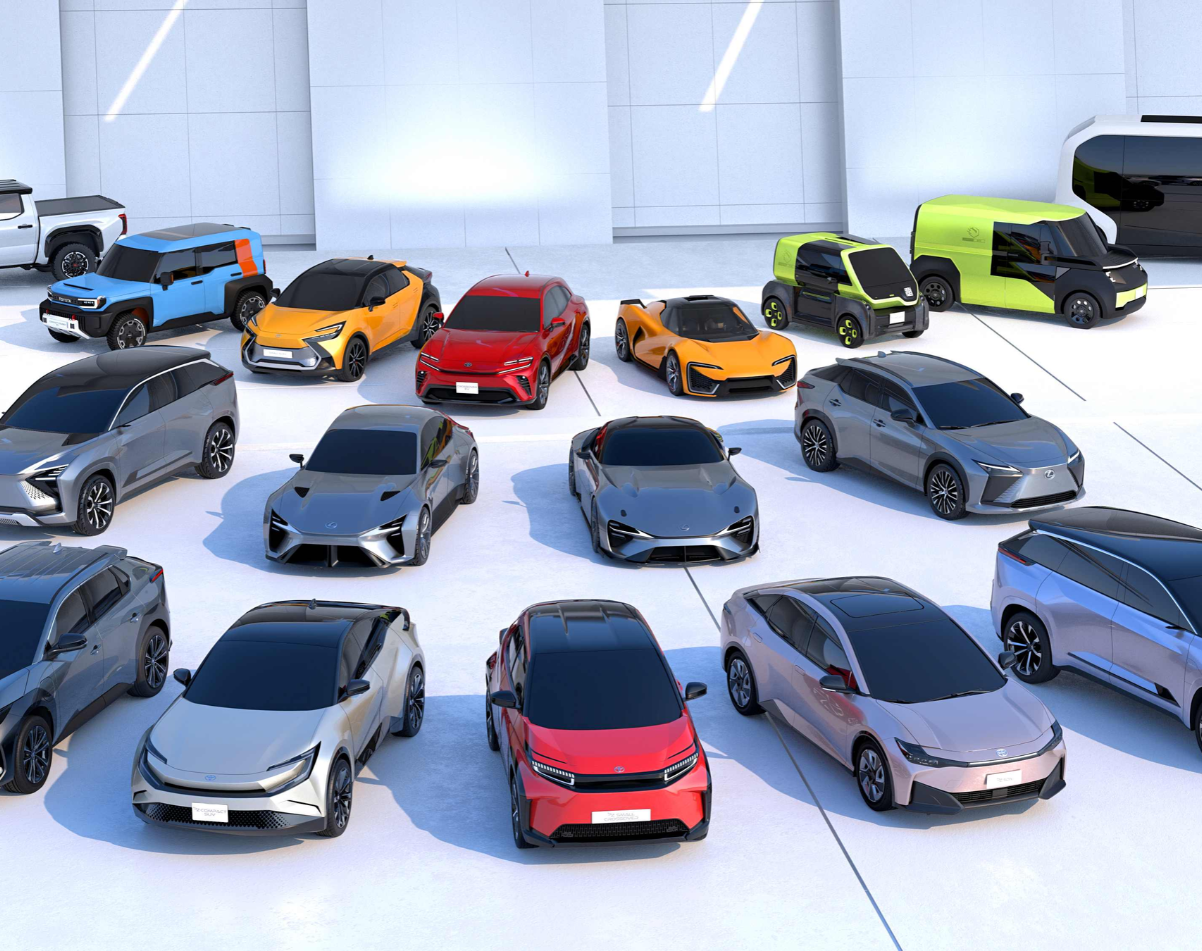
PHOTO COURTESY: TOYOTA
With up to ₱60 billion in government incentives aimed at attracting electric vehicle manufacturers, the Philippines is positioning itself for a new era of mobility. But can affordable EVs, reliable charging infrastructure, and local manufacturing keep pace with the country's ambitions?
The future of transportation is increasingly electric, and the Philippines is making moves to become part of the global shift.
From more affordable electric car models entering the market to government-backed incentives for local manufacturing, the country's electric vehicle (EV) industry is gaining momentum. However, as more Filipinos consider making the switch, questions about vehicle prices, charging accessibility, and long-term infrastructure remain.
The challenge is no longer simply convincing consumers that electric vehicles are the future. It is making sure the country is ready to support that future.
A ₱60-BILLION PUSH FOR LOCAL EV MANUFACTURING
One of the government's biggest moves came with the signing of Executive Order No. 121 on July 29, 2026, establishing the Electric Vehicle Incentive Strategy (EVIS) Program.
The program provides up to ₱60 billion in fiscal incentives to encourage companies to manufacture and assemble battery electric vehicles, hybrids, commercial vehicles, and their components in the Philippines.
Under the initiative, qualified manufacturers must commit at least ₱5 billion in new investments and introduce their registered vehicle models to the domestic or export market within three years.
The incentives are designed to attract automotive companies, strengthen local supply chains, create employment opportunities, and position the Philippines as a potential regional manufacturing hub.
The Department of Energy (DOE) also expects local manufacturing and assembly to help reduce EV prices by approximately 6% to 12%, potentially translating to savings of up to ₱200,000 per vehicle, depending on the model.
However, the ₱60-billion allocation does not automatically mean cheaper cars overnight. Actual consumer savings will depend on whether manufacturers invest in local production, achieve their targets, and pass on lower costs to buyers.
CAN FILIPINOS AFFORD THE SWITCH?
For many Filipino motorists, the decision to purchase an electric vehicle still comes down to one major consideration: affordability.
Although EV options have expanded, their upfront prices can remain a significant investment, particularly for households accustomed to conventional gasoline-powered vehicles.
The entry of more competitively priced models from brands such as BYD, MG, GAC Aion, Chery, and VinFast is helping broaden consumer choices. Meanwhile, Tesla continues to serve a segment of the market looking for premium electric vehicles.
Government policies have also helped make imported EVs more accessible. Under existing tariff measures, certain fully imported electric vehicles benefit from zero import duties until 2028, alongside other tax incentives.
This has allowed more brands and models to enter the Philippine market, giving consumers greater opportunities to compare prices, features, driving range, and after-sales services.
Still, the purchase price is only part of the equation.
Potential buyers must also consider battery warranties, replacement costs, maintenance, insurance, resale value, and the availability of service centers. While EVs generally have fewer moving parts than traditional combustion-engine vehicles, ownership still comes with long-term costs that consumers need to understand.
For the EV revolution to reach beyond affluent households and early adopters, affordability must extend beyond showroom prices.
CHARGING STATIONS: IS THE INFRASTRUCTURE READY?
Another major consideration is whether motorists can conveniently charge their vehicles wherever they go.
Unlike traditional gasoline-powered cars, EVs require access to compatible charging facilities, whether at home, workplaces, commercial establishments, or public charging stations.
According to the DOE, the Philippines had 1,876 registered EV charging stations nationwide as of the end of August 2026.
While the network continues to expand, the distribution and availability of these facilities remain important concerns.
A September 2026 report by BusinessMirror, citing data from the Electric Vehicle Association of the Philippines (EVAP), highlighted the country's reliance on slower alternating-current (AC) charging facilities compared with direct-current (DC) fast chargers.
This can mean longer waiting times for motorists who depend on public charging, particularly those without access to home charging facilities.
The concern becomes more significant for drivers who frequently travel between cities or live outside major urban centers, where charging options may be limited.
The issue is not just about building more stations. Charging facilities must also be strategically located, reliable, compatible with different vehicle models, and accessible to everyday motorists.
Without a dependable charging network, even the most affordable electric vehicle may become an inconvenient choice.
AUTOMOBILE BRANDS EYE THE PHILIPPINES
The country's growing EV market is also attracting the attention of international automotive manufacturers.
Among the notable developments are proposals from Vietnam's Vingroup, the company behind VinFast, and Mitsubishi Motors Philippines.
In an October 2026 report by The Business Times, Vingroup was reported to be planning a US$500-million production hub in Batangas, with a proposed initial capacity of 200,000 four-wheeled electric vehicles annually.
Meanwhile, Mitsubishi Motors Philippines was reportedly considering a ₱7-billion investment to expand its existing manufacturing operations in Santa Rosa, Laguna, potentially including hybrid vehicle assembly.
These proposals could represent significant opportunities for the local automotive industry. However, neither company had made a final investment commitment at the time of the report.
If realized, such projects could help create jobs, encourage technology transfer, strengthen local suppliers, and reduce the country's reliance on imported finished vehicles.
For the Philippines, the goal is to move beyond being a market that simply purchases electric vehicles and become a country that can manufacture, assemble, and eventually export them.
GLOBAL TRADE RESTRICTIONS ADD ANOTHER CHALLENGE
Despite the government's efforts, the country's EV manufacturing ambitions are unfolding in an increasingly complicated global trade environment.
A November 19 report by BusinessMirror highlighted how tighter trade restrictions in major markets could affect the Philippines' plans to attract automotive investments.
One concern involves the European Union's investigation into imports of certain hybrid vehicles. South Korea questioned the investigation during a World Trade Organization meeting, raising concerns about transparency, quota allocations, and the treatment of different vehicle categories.
Other countries, including Japan, the United Kingdom, Switzerland, and Türkiye, also raised concerns about due process.
Although no safeguard measure had been imposed at the time of the report, the development illustrates the trade uncertainties manufacturers may face when planning production and exports across international markets.
For the Philippines, this matters because attracting foreign manufacturers is only one part of the equation. The country must also create an environment where companies can produce competitively and access international markets without being exposed to unpredictable trade barriers.
The government will therefore need to balance investment incentives, trade policies, and the development of domestic suppliers to make local production sustainable.
WHAT DOES THE FUTURE HOLD FOR FILIPINO MOTORISTS?
The shift toward electric mobility is already underway, but the Philippine market still has considerable room to grow.
Data from the Chamber of Automotive Manufacturers of the Philippines (CAMPI), cited by The Business Times, showed that sales of battery-electric, hybrid, and plug-in hybrid vehicles reached 54,372 units in the first nine months of 2026, representing a 163% increase compared with the same period in 2025.
Their combined share of vehicle sales also rose to 17.7%, reflecting growing interest in alternatives to traditional gasoline-powered transportation.
However, the figures cover different types of electrified vehicles, including conventional hybrids that do not require external charging. This distinction matters when assessing how quickly the country is transitioning to fully electric mobility.
The government has set its sights on having electric vehicles account for 50% of the country's vehicle market by 2040. Reaching that goal will require more than incentives and an expanding selection of models.
It will take coordinated investments in charging infrastructure, reliable electricity supply, consumer education, local manufacturing, and accessible financing.
There is also an opportunity for Filipino businesses to participate in the transition, particularly in automotive components, battery-related services, charging equipment, vehicle maintenance, and other supporting industries.
Ultimately, the success of the EV revolution will not be measured solely by how many electric vehicles enter Philippine roads. It will also depend on whether ordinary Filipino households can afford them, whether motorists can charge them conveniently, and whether the country can build an industry that creates lasting economic opportunities.
The electric future may already be arriving. But for the Philippines, the real journey is making sure that no one is left behind.