Not registered yet? Here’s who can apply, which IDs are accepted, and what you need to know before heading to your local election office.
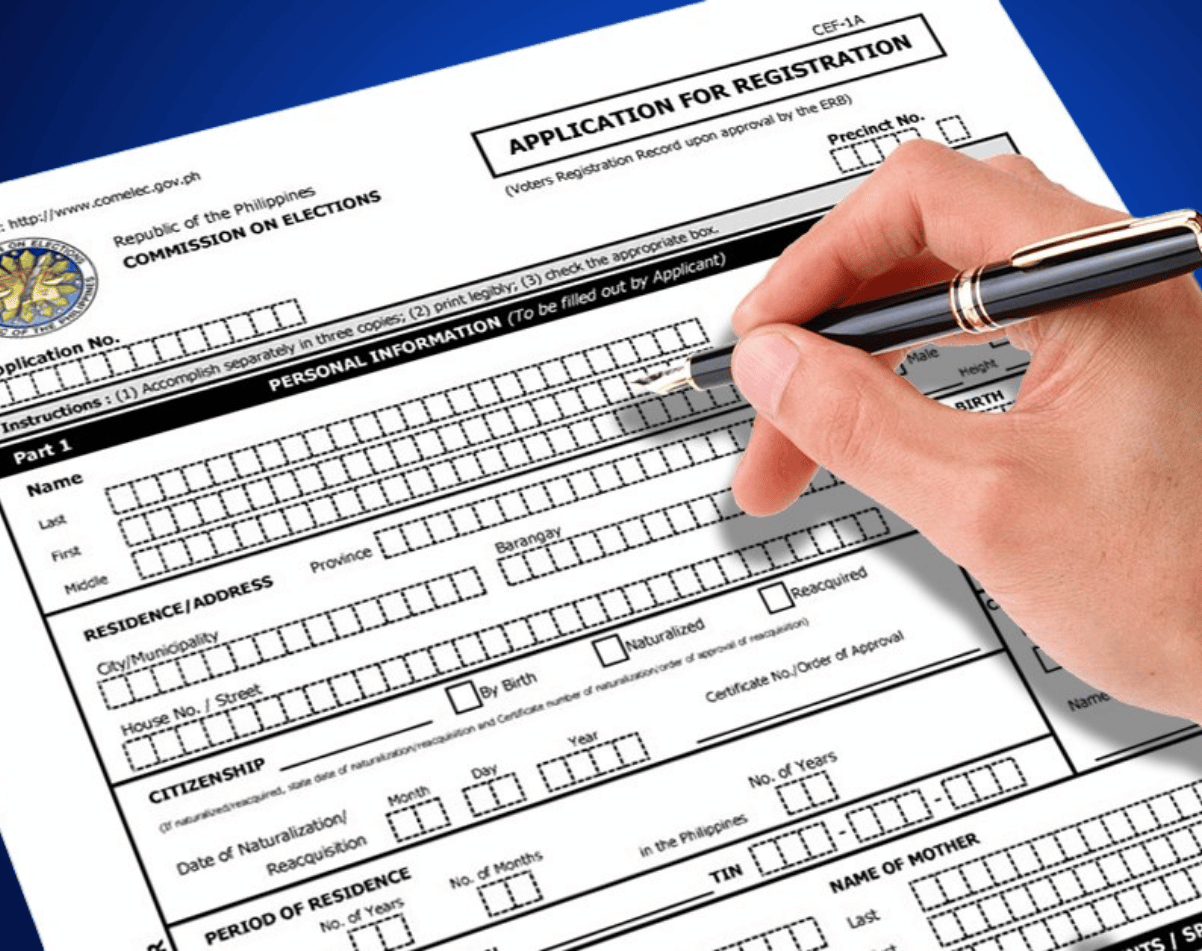
Not registered yet? Here’s who can apply, which IDs are accepted, and what you need to know before heading to your local election office.
The Commission on Elections (COMELEC) will resume voter registration on November 10, 2026, until July 30, 2027, ahead of the 2028 national and local elections, COMELEC Chairperson George Erwin Garcia announced Wednesday.
The registration period will give eligible Filipinos an opportunity to register for the first time, transfer their registration to another location, reactivate deactivated voter records, and update or correct their registration information.
For first-time applicants, understanding the qualifications and preparing the required identification documents can help make the registration process smoother.
Who can register as a voter?
Under Section 9 of Republic Act No. 8189 and Section 13 of COMELEC Resolution No. 10963, Filipino citizens who are not yet registered voters may apply if they meet the following requirements for national and local elections:
Age: At least 18 years old on or before election day.
Residency: A resident of the Philippines for at least one year and a resident of the city or municipality where they intend to vote for at least six months immediately preceding the election.
Legal eligibility: Not disqualified from registering under the law.
Applicants who have not yet reached the required age or residency period when applying may still qualify if they will meet the requirements by election day.
Who is disqualified from registering?
The law identifies certain individuals who may be disqualified from registering as voters, including:
Individuals sentenced by final judgment to imprisonment for at least one year, unless the disqualification has been removed by plenary pardon or amnesty.
Individuals convicted by final judgment of crimes involving disloyalty to the duly constituted government, such as rebellion or sedition, or crimes against national security, unless their full civil and political rights have been restored in accordance with the law.
Individuals declared insane or incompetent by a competent authority, unless subsequently declared no longer insane or incompetent by the proper authority.
For the first two categories, the right to vote is generally reacquired five years after service of sentence, subject to the applicable legal provisions. Applicants with questions about their eligibility should consult COMELEC or a qualified legal professional.
What IDs are accepted for voter registration?
Applicants must establish their identity when filing an application. Under COMELEC Resolution No. 10963, the following identification documents may be presented:
National ID under the Philippine Identification System (PhilSys)
Postal ID
Person with Disability (PWD) ID
Student ID or library card signed by a school authority
Senior Citizen (SC) ID
Land Transportation Office (LTO) driver's license or student permit
National Bureau of Investigation (NBI) clearance
Philippine passport
Social Security System (SSS), Government Service Insurance System (GSIS), or other Unified Multi-Purpose ID
Integrated Bar of the Philippines (IBP) ID
Professional Regulation Commission (PRC) license
Certificate of Confirmation issued by the National Commission on Indigenous Peoples (NCIP), for members of Indigenous Cultural Communities or Indigenous Peoples
Barangay ID or certification with a photograph
Other valid government-issued IDs
Applicants who do not have any of these documents may establish their identity through an oath-based identification by a registered voter from the precinct where they intend to register or by a relative within the fourth civil degree of consanguinity or affinity. Each registered voter or relative may identify no more than three applicants.
Important: A Community Tax Certificate, commonly called a cedula, and Philippine National Police (PNP) clearance are not accepted as valid identification documents for voter registration. If an applicant cannot establish their identity through the prescribed documents or identification procedure, COMELEC will not issue an application form or accept a pre-accomplished form.
These requirements are outlined in COMELEC’s official Registration Requirements page.
How can first-time voters prepare?
Applicants should prepare an accepted identification document and their complete residential address before visiting their local COMELEC Office of the Election Officer.
Under COMELEC’s registration rules, applicants must personally appear before the election officer, submit their application, and undergo the required verification and biometric capture, including their photograph, fingerprints, and signature.
Applicants may also access the appropriate application form through the COMELEC website, fill it out electronically, and print a copy for submission. However, completing the form in advance does not replace the required personal appearance and registration procedures.
For the latest instructions, forms, and registration updates, visit the official COMELEC website.
Register early and prepare for the 2028 elections
With voter registration scheduled to run from November 10, 2026, through July 30, 2027, eligible Filipinos have a window to register or update their records ahead of the 2028 national and local elections.
Those who have moved to another city or municipality, have deactivated records, or need to correct their registration details should also check which application applies to their situation.
Registration is an important first step toward participating in the country's next national and local elections. Eligible voters are encouraged to prepare their documents, check official COMELEC announcements, and complete the appropriate process within the registration period.
Source: Commission on Elections; Republic Act No. 8189; COMELEC Resolution No. 10963.