By Lorraine Ramillano
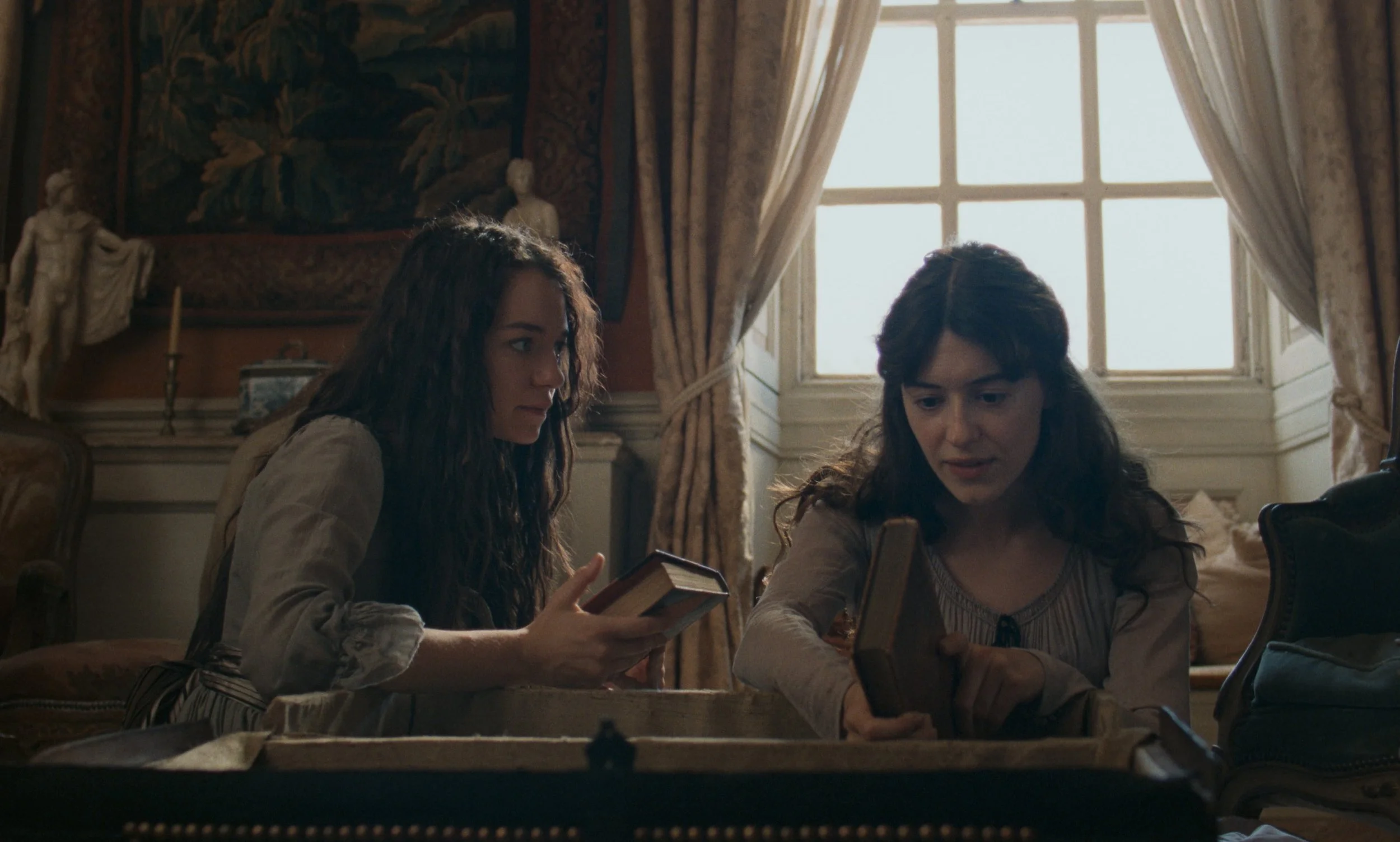
Photo Courtesy: Universal Pictures
In this 2026 adaptation of Austen’s beloved novel, Elinor and Marianne Dashwood live, breathe, and dance before our very eyes like never before. These two girls, intrinsically bounded to one another by blood and by fate, move with every emotion, provoking audiences to feel their racing pulse in excitement and anxiety. Of course, these characters would not have stolen our breaths if it weren’t for the superb performances of Daisy Edgar Jones, who plays the introspective Elinor, and Esmé Creed-Miles, who plays the passionate Marianne, each a counterpart of one another.
The larger-than-life depiction of the sisters also owes its thanks to Georgia Oakley’s masterful direction. Oakley is brilliant in her intentionality, putting much care into every shot -- from London’s faraway buildings peeking over the curving hills, to the fruit left on the Dashwood’s table, a particular shot reminiscent of a Rembrandt painting. Not only does it allot space for the scenes to linger -- a rarity amidst the action-packed films these days -- it also serves a mighty feast for the eyes, comparable to the 2005 adaptation of Pride and Prejudice starring Kiera Knightly and Matthew Macfayden. Accompanied by heartfelt, atmospheric violin strings, and it might just give Pride and Prejudice (2005) a run for its money.
Though what makes this adaptation shine amongst the many other Austen iterations is the sisterly relationship between Elinor and Marianne. These are two people who know each other so intimately, their knowledge of one another makes the others personhood. I call back to the philosopher Iris Murdoch’s sentiments on love, how it is a way of seeing reality, the reality of yourself and of the person you love. In this regard, there is no world in which Marianne exists without Elinor and vice versa. Without the influence of the other, they cannot be the Marianne or Elinor we know and love. If such a world were to exist, they would be a different kind of Marianne and Elinor.
Their knowledge of one another causes tension, yes, but it is also what saves them from themselves. Perhaps only in sisterhood is this kind of love possible.
Oakley chooses to end the film with a shot of Elinor and Marianne instead of their love interests. The two sisters look at one another with palpable warmth, the sun falling behind them. It is a gaze that says, I know what you’ve been through to get to this point, and I will bear witness to your many days after.
Sense and Sensibility has always been a story about sisterhood. It was never about the boys and their pistols or their horses, at least to me. Sense and Sensibility starts with Elinor and Marianne, and it will end just the same.